Donate
In the Nick of Time: Serendipitous Seed Collection During Fire Season
At the time of this writing, CalFire incident reports state the Plaskett Fire is 1% contained and has spread to 27,580 acres across the Silver Peak and Ventana Wildernesses. Six days have passed since the wildfire erupted, and it has already grown to over 4,500 acres larger than the Timber Fire in the north, which has been burning through Big Sur for over three weeks.
While the rugged beauty of Big Sur and its coastal Cypress and Redwood forests are widely known, not many are aware of its other endemic native plant residents – one of them being a rare species of manzanita, Hoover’s manzanita (Arctostaphylos hooveri.) This species grows as a shrub or small tree, with the classic manzanita traits of deep red, peeling bark and small fruits that resemble miniature apples. Its more distinctive traits include velvety, spade-shaped pale green leaves and astoundingly sticky manzanita fruits.
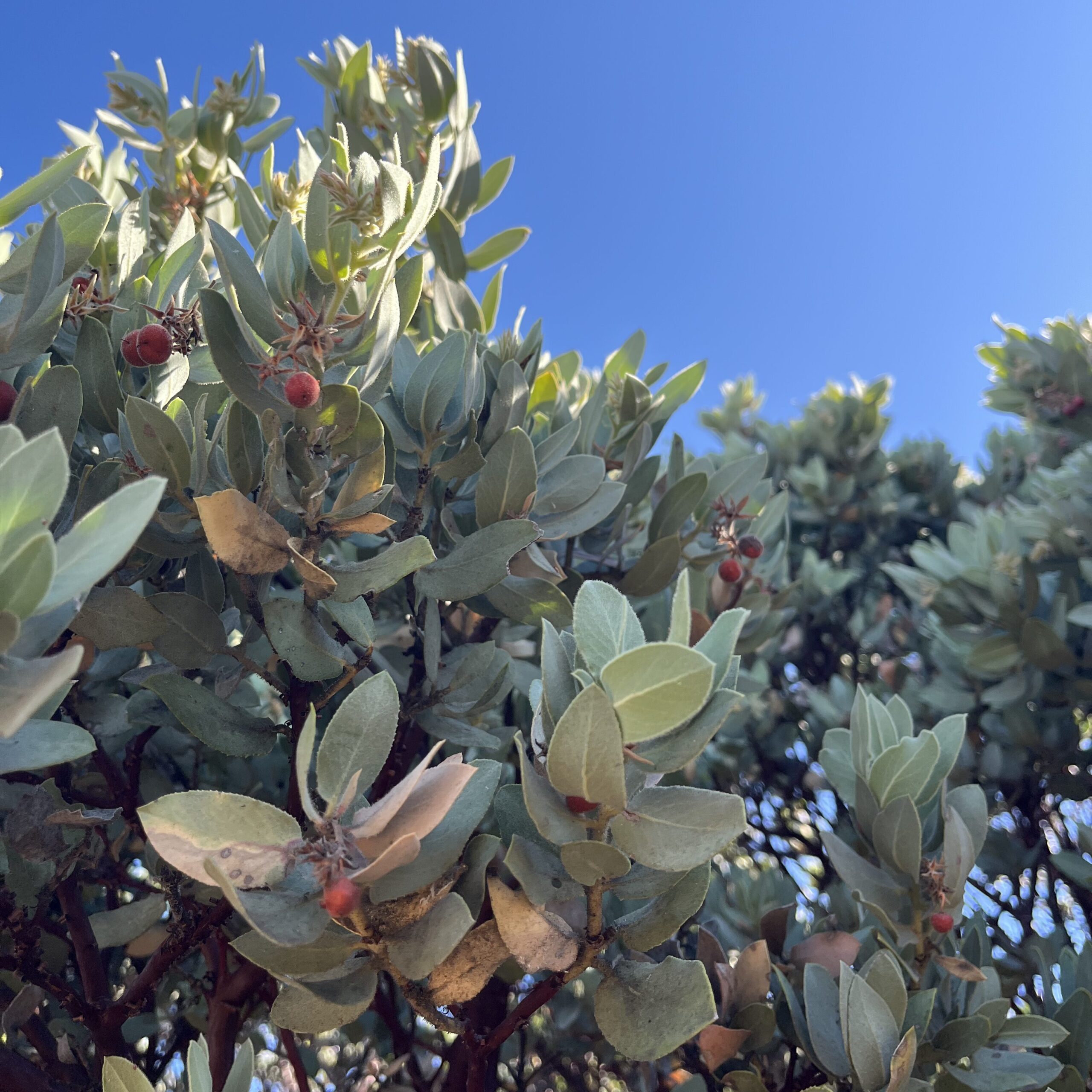
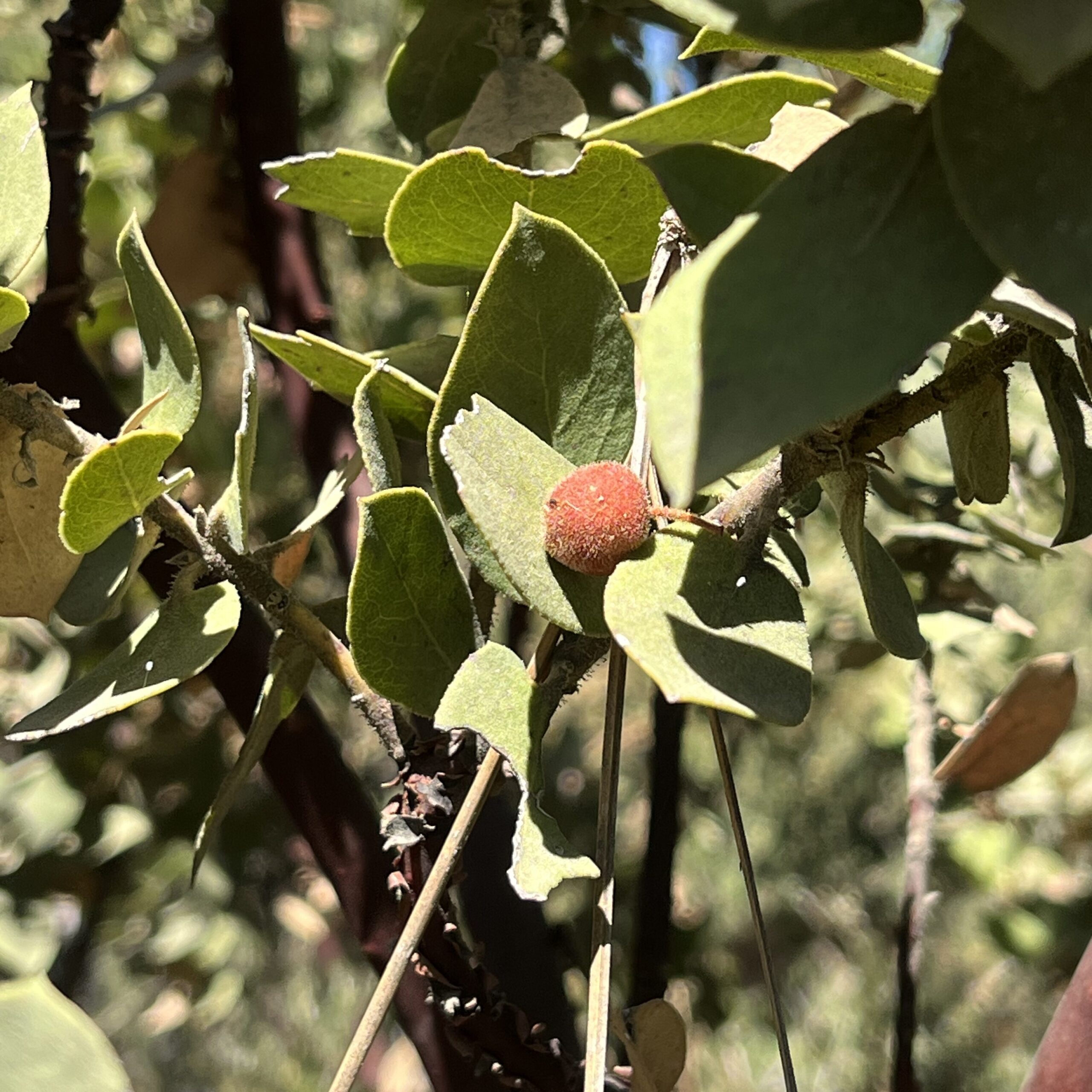
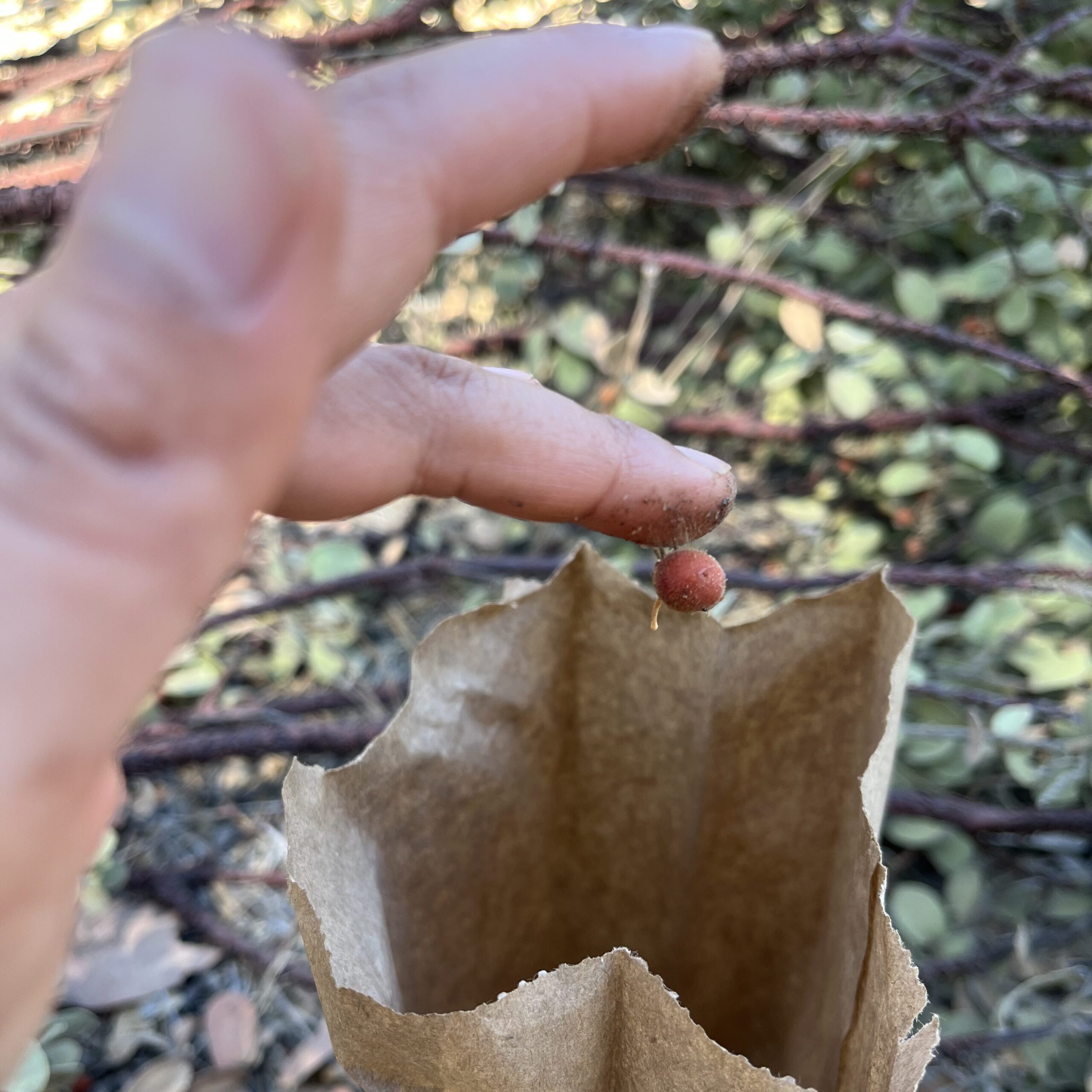
fruits were often found stuck to leaves
Hoover’s manzanita has been assigned California Rare Plant Rank 4.3, meaning its rarity is mainly due to the fact that this velvety shrub only exists at high elevation in the Santa Lucia Mountains, and nowhere else in the world – areas that the Timber and Plaskett Fires are currently devouring.
The Inadvertent Seed Rescue
Fortunately for the rare manzanita species, Christina Varnava Romo, our Garden’s Living Collections Curator, had long planned a field trip during the first week of August specifically to collect its seeds – serendipitously, just days before the Timber Fire ignited. The collection trip came to fruition as a result of the Priority U.S. Trees Conservation Awards, which prioritizes rare and threatened taxa that have very little representation in botanic gardens around the world. The grant was awarded to our living collections by Botanic Gardens Conservation International (BGCI) and U.S. Botanic Garden, which had listed Hoover’s manzanita (among others) as a target species for conservation efforts.
Our small team for this trip comprised Christina, Phoebe Swigart, gardener and steward of our Garden’s Manzanita Section, and me, living collections coordinator. Armed with Kauffman, Parker, and Vasey’s “Field Guide to Manzanitas” and GPS points of previously recorded historic observations gathered by Christina, our team set off early on a cloudy August morning in search of Hoover’s manzanita.
Dirt Roads to High Elevations
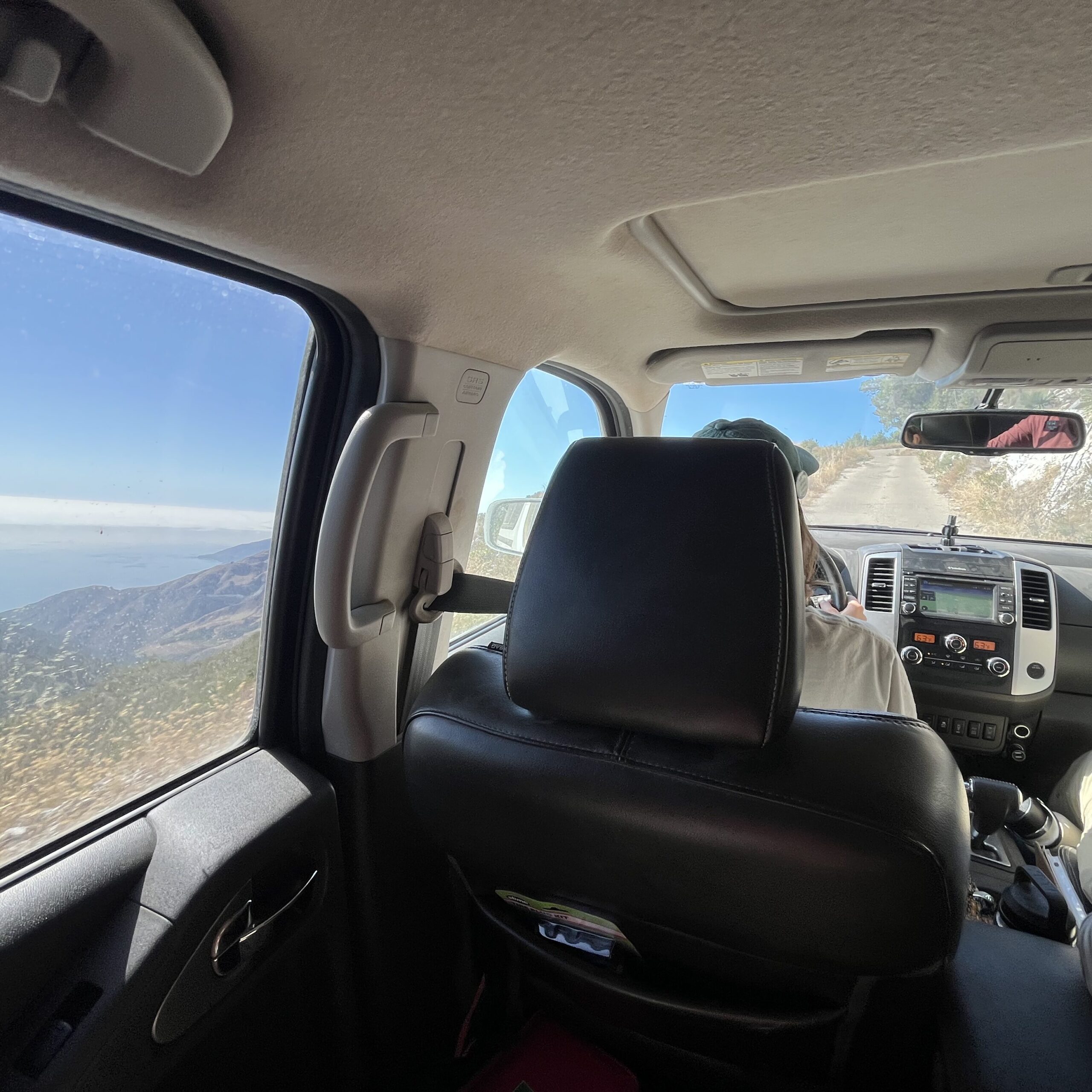
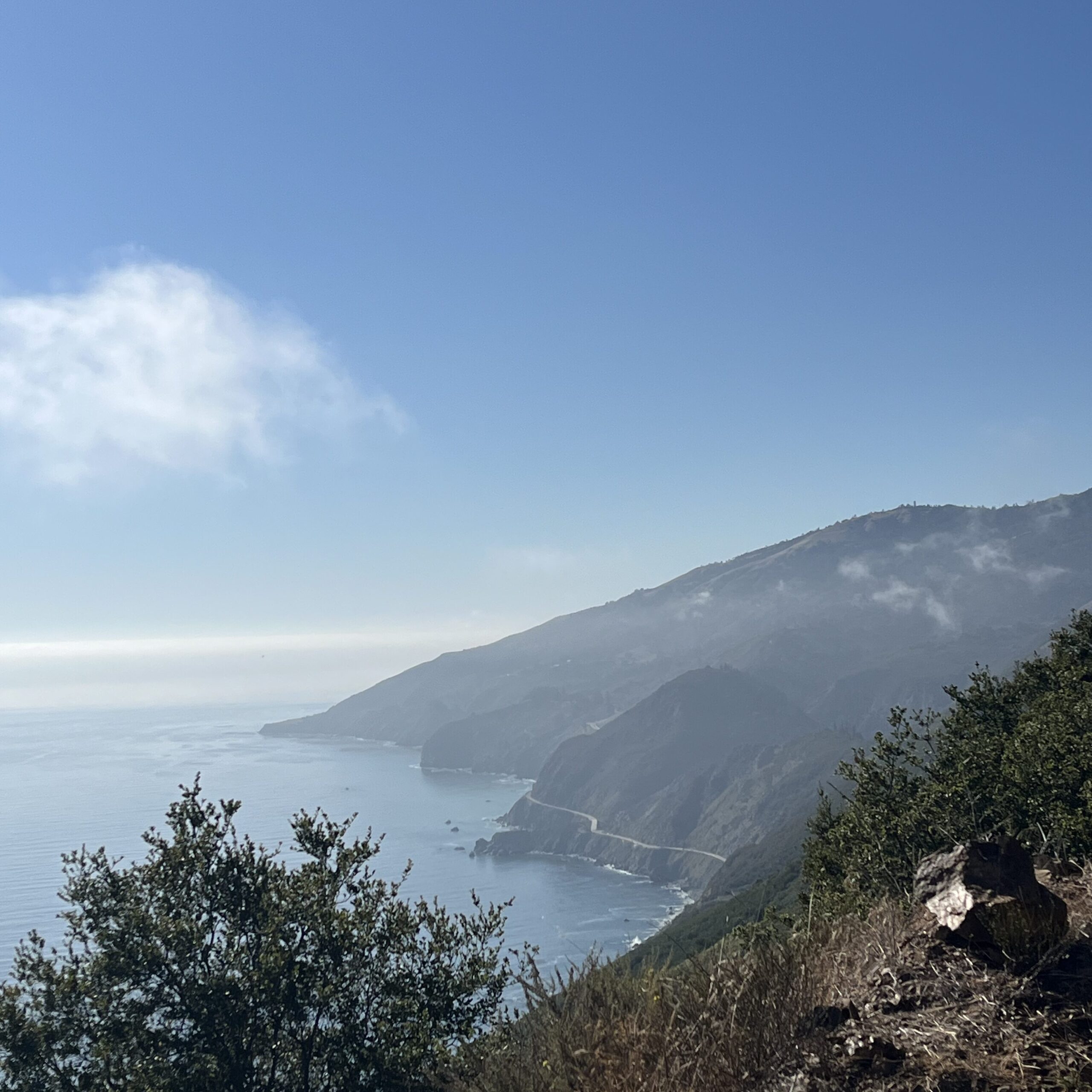
The hunt for the rare manzanita began as we pulled into Los Burros Rd, an unpaved road off the Pacific Coast Highway in Monterey County. The morning so far had been cool, grey, and overcast; but as we continued up the foggy forested foothills of the Santa Lucia Range, we eventually ended up in toasty full sun above the clouds, the rugged dirt road cutting in between pine woodland and chaparral.
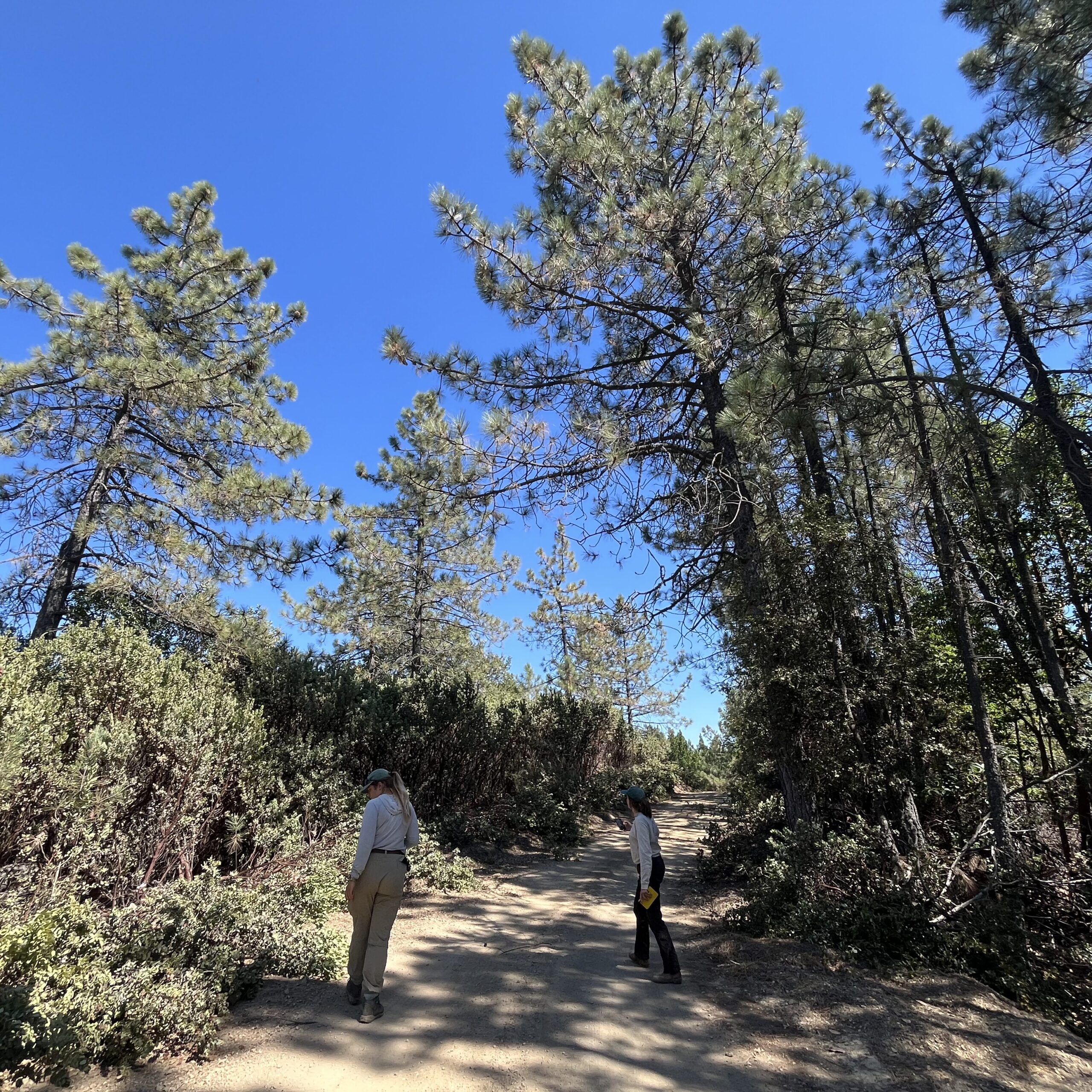
While our Hoover’s manzanita only existed in a small portion of the world, it evidently was relatively abundant within its natural habitat. By early noon, we found our first sighting growing at the foot of a towering pine tree (Pinus sp.) on a small, vegetated island in the middle of a road junction.
This pine woodland association proved to be a consistent, strong marker in identifying our target Hoover’s manzanita – which was extremely helpful since, as it turned out, a very similar-looking but much less velvety species called Howell’s manzanita (Arctostaphylos glandulosa subsp. howellii) also inhabited the area. Thanks to the neighboring pines and differing levels of leaf fuzz, the imposter manzanita only fooled us once.
Fruits from the Hoover’s manzanita were also tackier to the touch, given that they were not already covered in dust kicked up from cars driving down the dirt road. After hours of collecting, our hands felt as if they had been thoroughly coated with a dirt-infused glue stick; baby wipes were largely ineffective against its surprising adhesive properties.
Roadside Vegetation, Brushed for Miles
As we ventured further through the Silver Peak Wilderness, the road began to narrow. The vegetation lining the road had been very recently cut back; routine maintenance work to make sure the road remained passable. The crew hadn’t yet gotten a chance to return and clear the brush away. For miles, these fallen branches reached towards the truck and caught its exterior as we drove through.
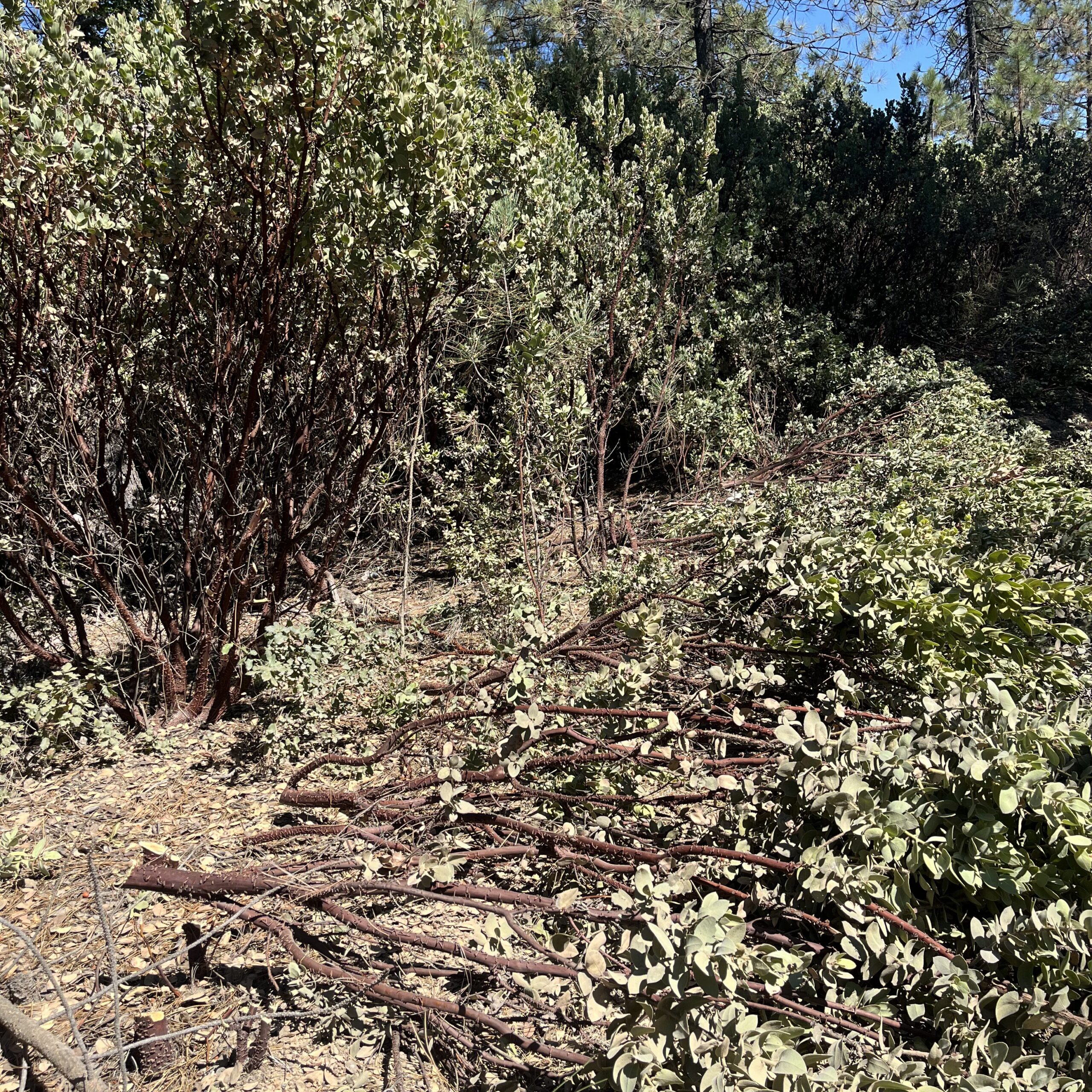
Unfortunately, for a few long stretches, much of what was cut down happened to be our very target species, the rare Hoover’s manzanita — with its branches covered in fruit.
(Arctostaphylos hooveri) that had been inadvertently cut back as part of road maintenance
While the sight was heartbreaking to behold, especially for our professional manzanita caretaker Phoebe, Christina took this as an opportunity to take a bulk collection. Normally, when collecting from the wild, there are protocols which limit the amount we take from individuals and populations of plants. Most especially with rare plants, these limits are followed in order to protect the population’s genetic diversity and ensure its longevity in the area; however, this case was an exception.
With the mother plants already severely cut back, we gathered as many of the sticky little fruits as we could from the pruned branches of Hoover’s manzanita piled high along both sides of the road.
This bulk collection differed from the method of collection we had utilized for the rest of the trip, wherein seeds were only gathered from one specific individual at a time (maternal line collection). Biodiversity is a priority in botanic conservation work, and maternal line collections allow for us to quantify the genetic diversity of a collection. Recording the mother plant’s habitat and GPS location also allows us to trace a seed (or the living plant that grew from it) back to its origin.
For this particular scenario, however, a bulk collection was deemed to be a more suitable conservation method. Despite not being able to definitively quantify how many maternal lines were collected or trace which plant the fallen branches had come from, overall, we were able to include a wider variety of genetics to our collection, in addition to allowing these seeds a chance to grow someday.
In post-fire retrospect, the unintentional damage to these lush stands of our rare Hoover’s manzanita did conservation a strange favor – we would not have had any reason to do such a large bulk collection of these seeds otherwise.
Timing is Everything
While collecting its sticky little manzanita fruits, Phoebe commented that we had “timed the trip perfectly” – many of the Hoover’s manzanitas we had come across, given that they had enough sun, were bursting with fruit ripe for the picking. Had the trip been planned too early, the fruits would not have been ready to pick; any later, as we’ve come to find out, the seed collection would not have been possible at all.
Now just about a month later, the areas we had just driven through for these collections have gone up in flames.
Not all hope is lost, as manzanitas are well adapted to fire; so much so that heat from fire is actually a necessity for their seed to germinate. Even then, however, manzanitas are notoriously slow to grow. More frequent wildfires can disrupt their growth, and thus their ability to repopulate.
We also observed that California Lilac species (Ceanothus spp.) tended to dominate the landscape in recent burn scars, namely, within the 2020 Chalk Fire Scar. Many historical observations of Hoover’s manzanita were recorded in the area, but even 6 years later, the only occurrences of the species we found were young and did not bear any fruit. Only time will tell whether these Hoover’s manzanita populations will reinhabit the area with as much vigor as they did before.
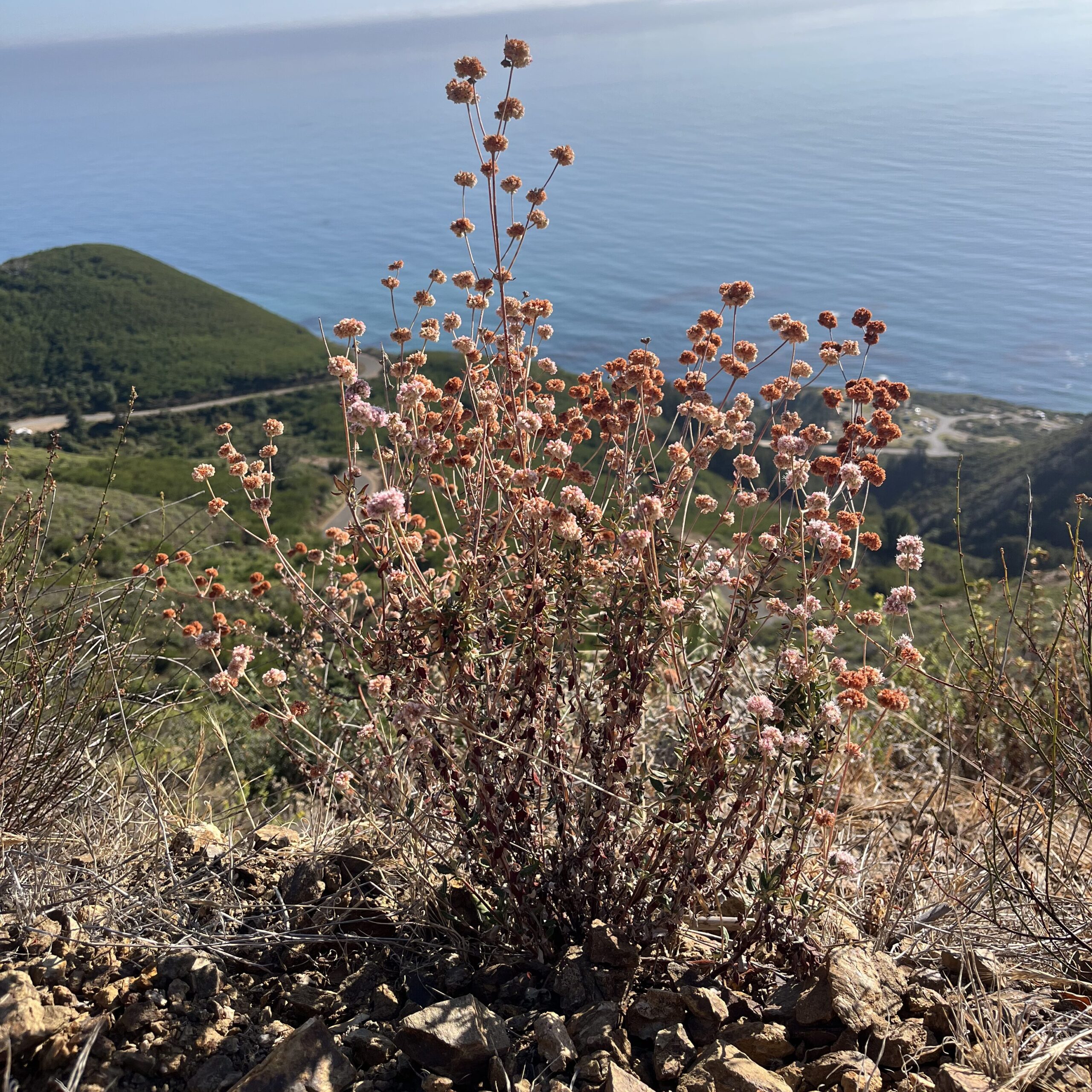
areas were no longer there; ceanothus dominated the landscape
For the meantime, the Hoover’s manzanita seed we collected is proving to be highly valuable, given that the Plaskett and Timber Fires have now burned through so much of its natural range. Our seed collection from this trip will be added to both the Living Collection and the Conservation Seed Bank, as well as shared with other botanic gardens. There were originally plans for a second trip to collect cuttings of Hoover’s manzanita in the fall, but the possibility now seems highly unlikely. Luckily, we at least took cuttings from one exceptionally healthy Hoover’s manzanita during this trip, and we’ve passed the baton to the Garden’s nursery staff to propagate the rare species for the Garden’s Living Collection.
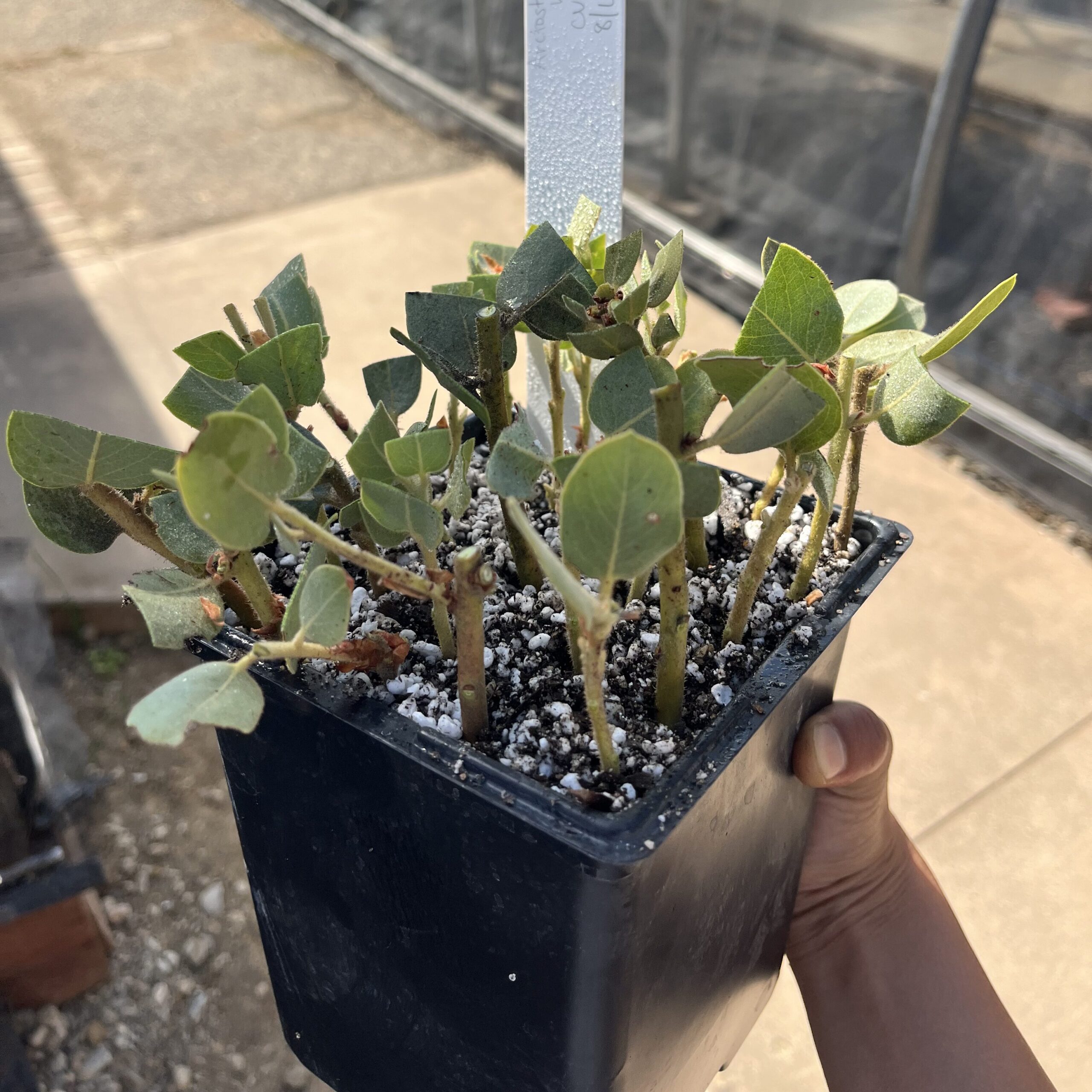
It’s devastating to think of how much of the Santa Lucia Range has been consumed by these fires, along with its native, potentially threatened or endangered inhabitants – whether flora or fauna. Despite this, I, for one, feel extra fortunate to have been able to take part in this incredibly important rescue mission and witness the fleeting beauty of such a special place before the wildfires struck.
The Science Behind It All
Putting Pollinators First Through Art: A New Way to Design Gardens
What the Torrey Pines Are Trying to Teach Us
The Ripple Effects of Invasive Herbivore Removal: A Study on Santa Rosa Island’s Torrey Pines