Donate
Putting Pollinators First Through Art: A New Way to Design Gardens
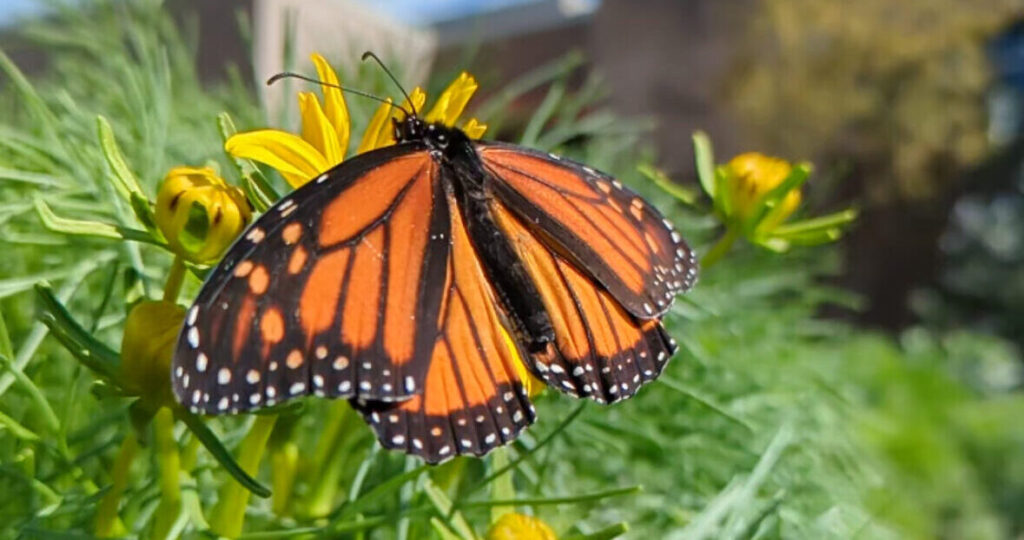
What if a garden wasn’t designed for people at all? What if it were designed for bees, butterflies, moths, beetles, and the many other pollinators that keep ecosystems alive?
This question sits at the heart of Pollinator Pathmaker, an internationally celebrated artwork by Alexandra Daisy Ginsberg. Santa Barbara Botanic Garden is excited to help bring Ginsberg’s artwork to California this spring. The Garden’s Terrestrial Invertebrate Conservation Ecologists Zach Phillips, Ph.D., and Sarah Cusser, Ph.D., recently collaborated with the artist to develop a new California bioregional Plant Palette. This partnership expands a project originally rooted in Europe, now allowing institutions, communities, and home gardeners across the West Coast to participate for the first time, helping to grow the world’s largest climate-positive artwork. By contributing expertise on locally appropriate plants and pollinator ecology, the Garden is helping ensure that California’s extraordinary diversity of pollinators is front and center in the artwork’s next chapter.
What Is Pollinator Pathmaker?
Pollinator Pathmaker is an artwork for pollinators, planted and cared for by humans. Created by artist Alexandra Daisy Ginsberg and originally commissioned in 2020 by the Eden Project in Cornwall, UK, with the support of many partners, the project is growing into a global living artwork spanning public gardens, museums, schools, and private backyards.
At its core, Pollinator Pathmaker asks us to rethink how we design gardens, and who gardens are really for. Bees, butterflies, moths, wasps, beetles, flies, and other pollinators are essential for plants to reproduce and ecosystems to function. Yet worldwide, pollinator populations are declining at alarming rates due to habitat loss, pesticide use, invasive species, and climate change.
Without pollinators, many plants cannot reproduce. Without plants, food webs unravel. Landscapes degrade, biodiversity declines, and the ecological systems we depend on, including agriculture, begin to falter.
Individuals, schools, and community groups can use the free online tool at pollinator.art to generate their own unique edition of Pollinator Pathmaker. Users can explore their planting design in 3D, view it through a simulated “pollinator vision,” learn about each plant, and download detailed planting instructions, complete with a certificate of authenticity for their one-of-a-kind artwork.
In this way, Pollinator Pathmaker blurs the line between artist, gardener, and conservationist. Every participant becomes part of the artwork itself. Rather than simply consuming nature, participants become stewards, actively shaping landscapes that support other species. For many people, this may be their first time planting with pollinators in mind. Pollinator Pathmaker provides both inspiration and guidance, giving participants the confidence and agency to create habitat in their own communities.
In the UK, Ginsberg has been collaborating on a UK Research & Innovation-funded interdisciplinary research project with the University of Exeter and the University of Edinburgh to investigate the ecological, social and philosophical implications of Pollinator Pathmaker as a living artwork. Researchers established 17 algorithmically designed Pollinator Pathmaker artworks alongside 15 conventional control gardens within a single village and have spent the past year exploring not only whether these artworks increase pollinator richness and diversity, but also how they influence the way people think about gardens, nature and our responsibilities towards other species. The project combines ecology, philosophy and social science to examine how algorithmically designed artwork can reshape relationships between people and the natural world. Although the research is ongoing, preliminary findings suggest that Pollinator Pathmaker plantings support greater pollinator diversity and, crucially, demonstrate the importance of connected networks of forage across the landscape, highlighting how gardens can function collectively rather than as isolated spaces. Chris Kaiser-Bunbury, Associate Professor at the Centre for Ecology and Conservation, University of Exeter, and Principal Investigator on the project, states: “Our project provides a fascinating and unique opportunity to scientifically test the conservation implications of an artwork designed for pollinator conservation. First results emerging from the project are intriguing, creating a complex picture of increased pollinator foraging in Pollinator Pathmaker plantings and the importance of considering the connectivity between artwork plantings over space and time”.
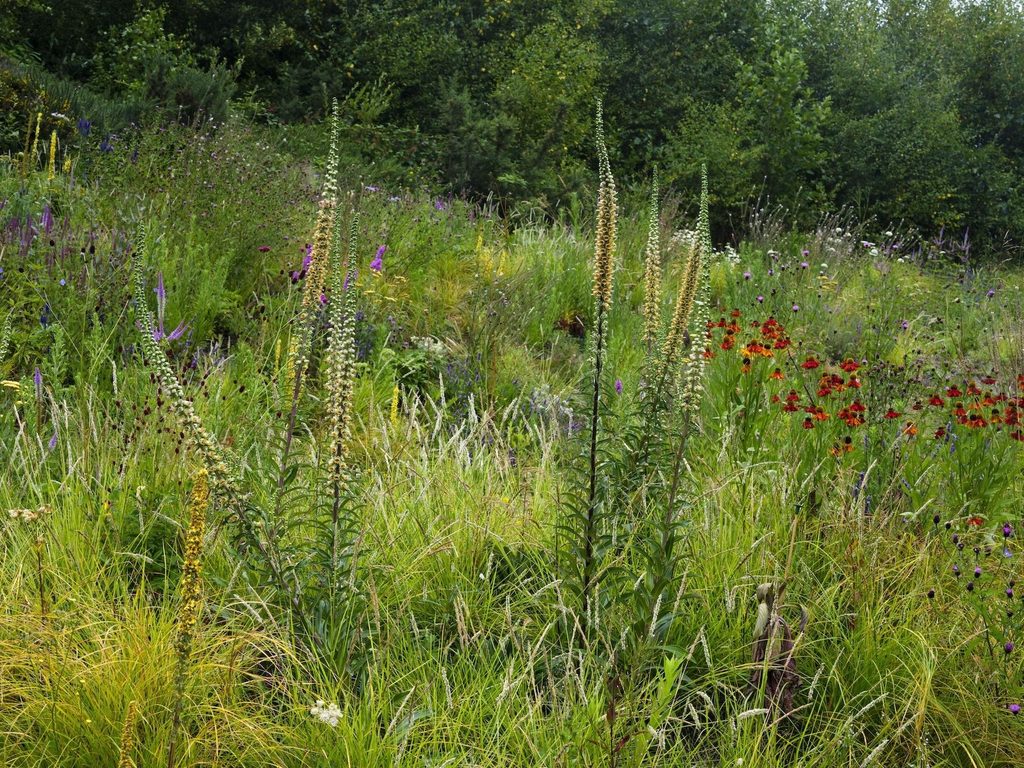
Seeing Gardens Through Pollinator Eyes
Rather than designing gardens based on human aesthetics alone, Ginsberg asked: What would a garden look like if it were designed from a pollinator’s perspective?
Pollinators experience the world differently than we do. They see colors we cannot, forage in specific ways, and emerge at different times throughout the year. A garden that supports them might look wilder, more layered, and less uniform than traditional ornamental plantings, but it is far more alive.
To turn this idea into reality, Ginsberg worked with horticulturalists, pollinator experts, and an AI scientist to create a unique algorithmic tool. This tool designs planting plans that prioritize empathy for other species, defining success as supporting the greatest diversity of pollinator species possible rather than the arrangement of plants for human enjoyment. Using a curated palette of locally appropriate plants, the algorithm selects and arranges species based on different pollinators’ needs. Every design it generates is different, but each one is optimized to provide food and habitat for as many local pollinators as possible. The result is a living artwork design for the tastes of pollinators.
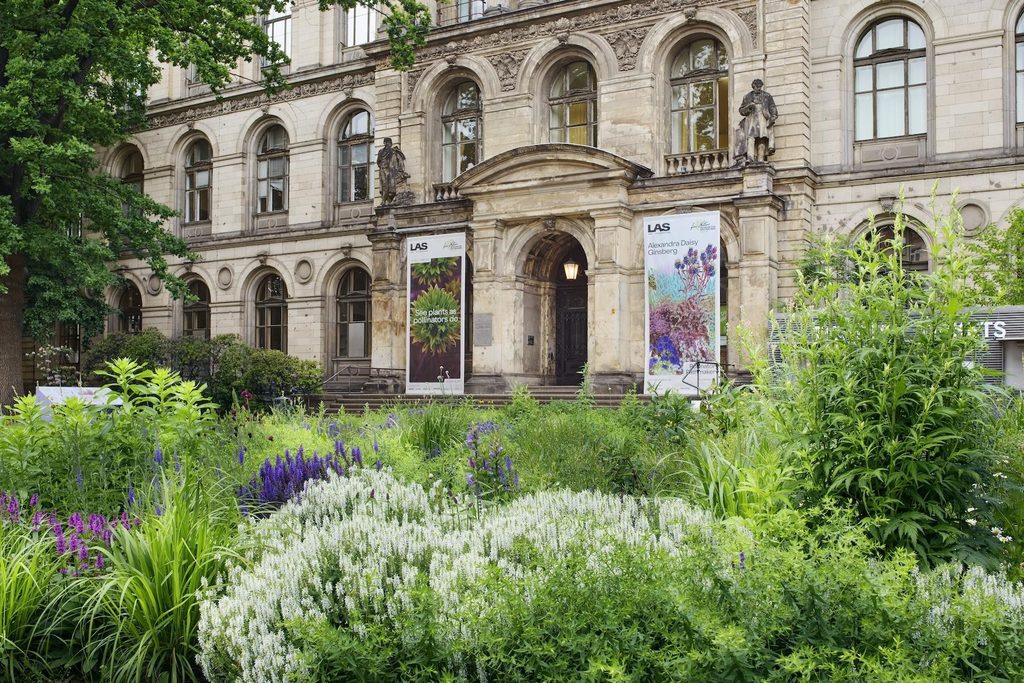
Commissioned by LAS Art Foundation. (Photo: Sabine Bungert.)
Bringing Pollinator Pathmaker to California
Until recently, Pollinator Pathmaker only supported regions in Atlantic and Continental Europe. With support from Google and Google Arts and Culture, the artist has developed new plant palettes for California and the northeastern USA. Expanding the project to California requires a new plant palette grounded in local ecology. California is a global biodiversity hotspot, home to thousands of native plant species and an astonishing diversity of pollinators; many found nowhere else on Earth. Working with Ginsberg and her team, including horticulturists Colin and Annie Skelly, Zach and I helped develop a California-specific plant palette that reflects our region’s unique habitats, seasonal patterns, and pollinator relationships.
This collaboration ensures that when Pollinator Pathmaker arrives on the West Coast this fall, it truly belongs here. From coastal sage scrub to chaparral and grasslands, California gardeners and institutions will soon be able to generate planting designs that are both artistically compelling and ecologically meaningful. Just as importantly, the project encourages people to reflect on why they plant gardens in the first place. Is a garden purely decorative, or can it also be habitat, refuge, and a form of ecological collaboration?
What’s Next?
With the California Plant Palette launching in fall 2026, the Garden is excited to see Pollinator Pathmaker take root across the region. This collaboration reflects our shared belief that conservation happens not only through institution-led research and restoration, but also through individual action, creativity, and connection. We all have the power to make a difference, and it could start by reimagining your relationship with the natural world.
Try it yourself: https://pollinator.art/us
And become a native plant steward: https://sbbotanicgarden.org/grow/join-the-movement/

In the Nick of Time: Serendipitous Seed Collection During Fire Season
The Science Behind It All
What the Torrey Pines Are Trying to Teach Us
The Ripple Effects of Invasive Herbivore Removal: A Study on Santa Rosa Island’s Torrey Pines