Donate
What the Torrey Pines Are Trying to Teach Us
For 22 years, scientists at Santa Barbara Botanic Garden have been asking what genetic diversity might mean for a rare tree. Then, in 2026, a wildfire changed the stakes.
One of the Rarest Trees on Earth
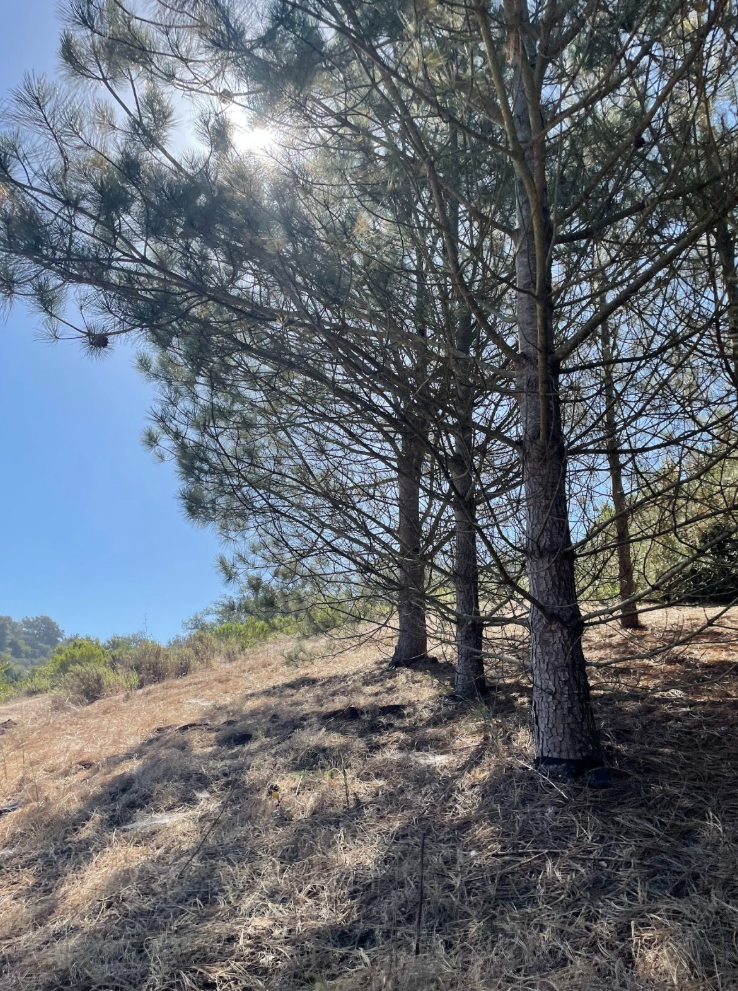
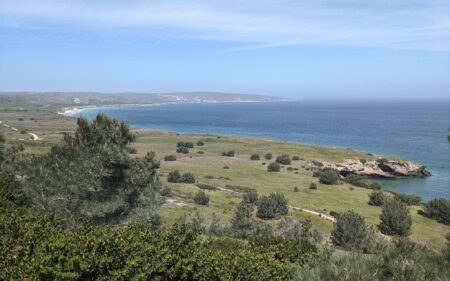
Every day, visitors pass two Torrey pines (Pinus torreyana) near the Garden’s entrance without realizing how special they are. The Torrey pine survives naturally in only two places on Earth: a small stretch of mainland coast near San Diego and a single population on Santa Rosa Island. The trees have endured drought, wind, salt, and other challenges for generations. But beneath their resilience was a mystery: almost all the mainland trees scientists examined carried remarkably similar genetic signatures.
Such low genetic diversity is exceptionally rare in a conifer. For most species, genetic diversity can provide options when conditions change. Torrey pines seemed to defy that expectation. How could a species with such a narrow genetic toolkit persist in a challenging environment, and could greater genetic diversity give it additional options in a changing world? There are no easy answers.
The Torrey Pine Experiment
Rather than studying these questions only in laboratories, researchers decided to let the trees help answer them through a long-term field experiment. The story began in the 1950s, when the USDA Horticultural Field Station in La Jolla grew Torrey pines from both the mainland and Santa Rosa Island. Some of those trees survived for decades, eventually producing cones that provided the starting material for a new generation of research.
In 2004, researchers collected open-pollinated cones from surviving mainland and island trees in the La Jolla planting. The resulting seedlings were grown and genetically screened before being planted in 2007 at Santa Barbara Botanic Garden’s Hay Hill property near Carpinteria. There, mainland trees, island trees, and hybrids between the two populations could be observed together under the same environmental conditions.
Forest geneticist F. Thomas Ledig was central to establishing the study, which grew from collaboration among the USDA Forest Service, academic researchers, and Santa Barbara Botanic Garden. The Garden provided the Hay Hill site and logistical support. By bringing trees with different genetic backgrounds into the same setting, researchers created a living experiment they could return to year after year to measure differences in growth, reproduction, and survival.
The idea was deceptively simple: if every tree experienced the same climate, soils, and weather, differences in how they grew and reproduced could more likely be attributed to their genetic backgrounds rather than environmental differences.
But answering those questions would take time. Torrey pines can live for centuries, far longer than most scientific projects. For nearly two decades, researchers and Garden staff have continued to measure and monitor the trees, watching for patterns and learning from trees whose full story is still unfolding.
A Fire That Changed the Stakes
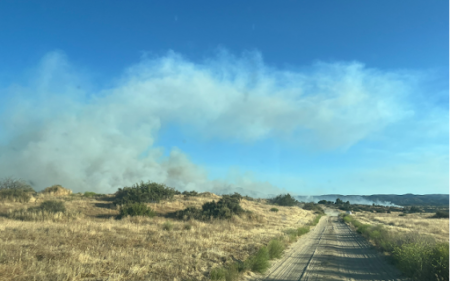
The research questions became even more relevant in 2026. After a wildfire ignited in dry vegetation and spread rapidly across Santa Rosa Island. Between May 15 and June 4, 2026, a third of Santa Rosa Island (equivalent to 18,379 acres) burned, including much of the Torrey pine grove.
When botanists and environmental scientists finally reached the grove, the scale of what had happened was still unclear. In the fire’s immediate aftermath, early assessments were optimistic. “I think we all breathed a big sigh of relief,” said Heather Schneider, Ph.D., the Garden’s director of conservation and research. Most trees appeared to still be standing, and the burn looked, in places, surprisingly gentle. But Torrey pines are not built to withstand fire, and damage that looks survivable in June can still prove fatal. By August, federal assessments told a harder truth: only about 2 percent of the grove had escaped the flames untouched.
As of September 1, the National Park Service indicates that 60% to 80% of Santa Rosa Island’s iconic Torrey pines may perish as a result of the largest wildfire. For everyone who has spent years studying and protecting these trees, the fire was heartbreaking. For this species already reduced to two groves on Earth, this loss carries a different weight than an ordinary wildfire.
The scientific experiment that started decades ago may now help conservationists understand how to respond to a major loss of wild Torrey pines. Decades of scientific work have quietly prepared for exactly this kind of moment, when this endangered species might be facing a massive population loss.
The Experiment Begins to Speak
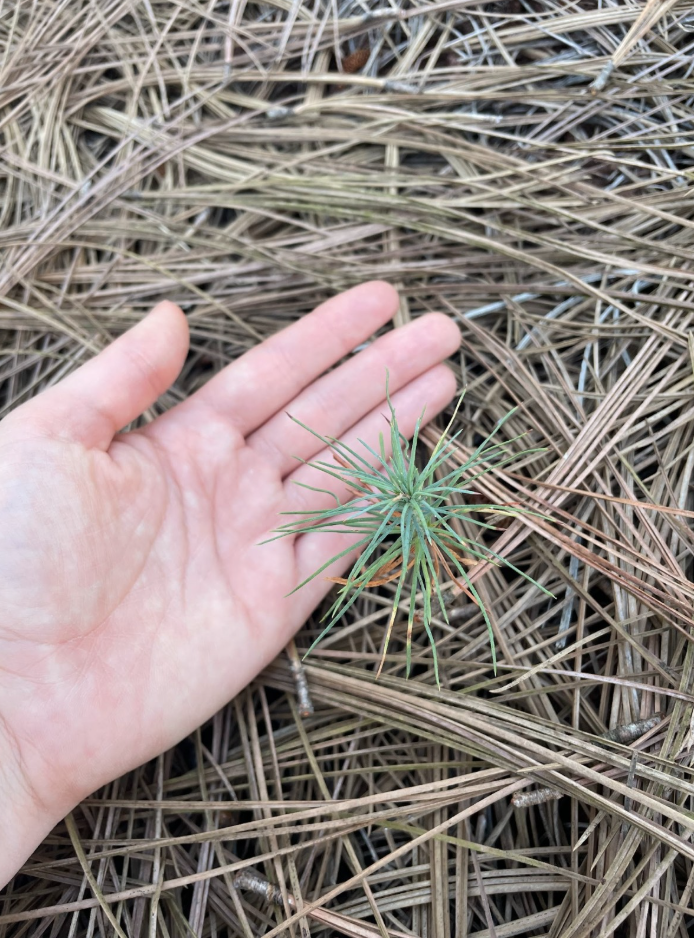
The fire has given the Garden’s long-running experiment a new sense of purpose. If much of the Santa Rosa Island population is impacted by the fire and potentially lost, conservationists may need to think carefully about how to preserve the species’ remaining genetic diversity, and whether introducing additional genetic diversity could play a role in its future. The trees growing at Hay Hill cannot provide all the answers, but after 22 years, they offer something rare: evidence that may help inform those decisions.
Researchers have found that the hybrid trees, produced by crossing mainland and island parents, consistently grow taller and produce more cones than either parent alone. This pattern, known as heterosis or hybrid vigor, offers an early clue to one of the experiment’s questions: genetic differences between the two populations can produce measurable differences in growth and reproduction, but whether those advantages translate into greater long-term survival or resilience remains unknown.
This is where time matters. Torrey pines can live for centuries, far longer than most scientific studies. What looks like an advantage today may change as the trees grow older. Researchers will need many more years of observation to see whether hybrid vigor persists, fades, or affects the trees’ ability to survive in other ways.
The experiment also raises a difficult conservation question: when should people intervene to help a rare species, and when should nature take its course? For Torrey pines, that could eventually mean asking whether introducing genetic diversity could help the species survive future threats, or whether it could have unintended consequences. The Hay Hill experiment cannot answer that question, but it will help inform future conservation efforts.
The trees are not giving us a simple answer. They are giving us something perhaps more valuable: evidence, questions, and time to keep learning.
Torrey Pines Continue to Surprise Us
Meanwhile, Garden teams are carefully documenting the condition of every tree in the burned grove. While many questions remain, they’ve already observed something unexpected: some cones opened after the fire, exposing their seeds. Whether this represents an important fire adaptation is still being investigated, but it reminds us that these trees continue to surprise us. “It’s a hard time to be a pine tree on Earth as the climate shifts,” Schneider says. “But I feel hopeful about the prospect of regeneration.”
That paradox — a species with almost no genetic diversity, yet resilient enough to survive centuries of hardship is today a practical matter. With most of Santa Rosa Island’s grove now threatened, the questions the Hay Hill experiment was built to answer are the same ones conservationists may soon have to act on: whether to let nature take its course or help it along with genetic diversity interventions. List of Literature and News Reviewed
Perhaps that’s the greatest lesson Torrey pines have to offer.
The next time you pause beneath a Torrey pine, take a closer look. Notice its rugged branches shaped by decades of coastal winds. Pick up one of its oversized cones. Imagine the generations of scientists, botanists, Indigenous communities, and land stewards who have all learned something different from this remarkable tree.
As botanist and author Robin Wall Kimmerer writes, “The land is the real teacher.” The Torrey pine reminds us that doing so requires curiosity, patience, and humility, and that some of nature’s greatest lessons come from slowing down long enough to listen.
List of Literature and News Reviewed
CNN (Aug 2026) Massive die-off predicted for exceptionally rare trees on California island wildlife oasis
Di Santo et al. (2025) Genetic Basis of Reproductive Isolation in Torrey Pine (Pinus torreyana Parry): Insights From Hybridization and Adaptation
Di Santo et al. (2021) Reduced representation sequencing to understand the evolutionary history of Torrey pine (Pinus torreyana parry) with implications for rare species conservation
Hamilton et al. (2017) Genetic conservation and management of the California endemic, Torrey pine (Pinus torreyana Parry): Implications of genetic rescue in a genetically depauperate species
National Park Service (Sept 2026) Santa Rosa Island Fire Website
National Park Service (Sept 2026) Initial Assessment indicates potential for 80% mortality among rare Torrey Pines following Santa Rosa Island Fire
Santa Barbara Independent (June 2026) Island of Ash: A trip to Santa Rosa Island after the fire
The Cool Down (Aug 2026) California Torrey Pine Grove faces mass die-off after Santa Rosa Island fire
About Our Interns
Tim Whitfield
A recent graduate of CSU Channel Islands, Tim has been contributing to the Garden’s conservation work for several years. As a volunteer, he helped sample insects and monitor the cloud forest on Santa Rosa Island during both the 2025 and 2026 field seasons. Now, as an EcoTeam intern, Tim is sorting those collected specimens, with a particular focus on identifying spiders.
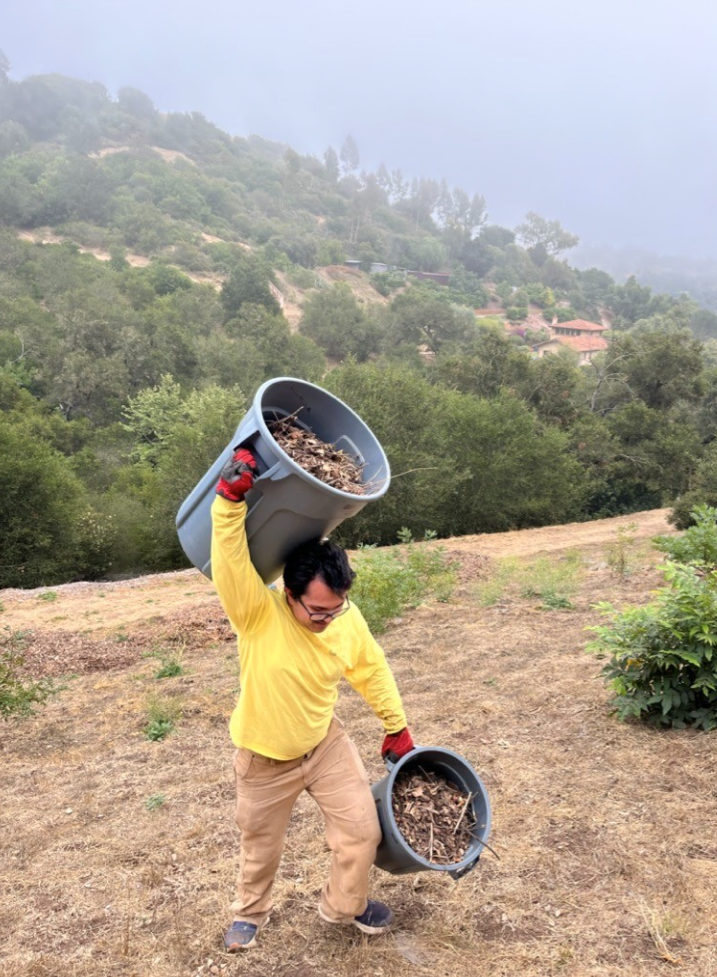
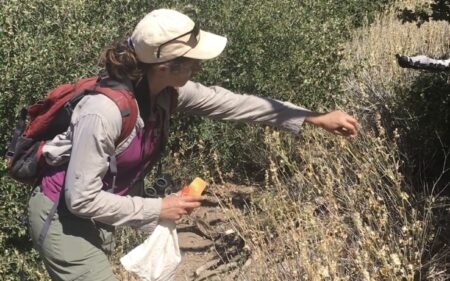
His work extends well beyond the insect lab. This summer, Tim has assisted with the pollination of rare plants in the greenhouse, pollinator, bird, and biomass monitoring at Elings Park, and even hauled mulch for the Garden’s new oak fuel break and joined in on the post-fire Torrey Pine census on Santa Rosa. No matter the project, Tim is always willing to jump in, learn something new, and lend a hand. We’re incredibly grateful to have him on the team.
Favorite group of organisms: Birds!
Favorite part of the internship: Taking part in the post-fire Torrey Pine census
Most unexpected takeaway: Spider identification is a spectrum. Some spiders are a simple glance; others take extreme patience and careful manipulation to ID.
Mae James
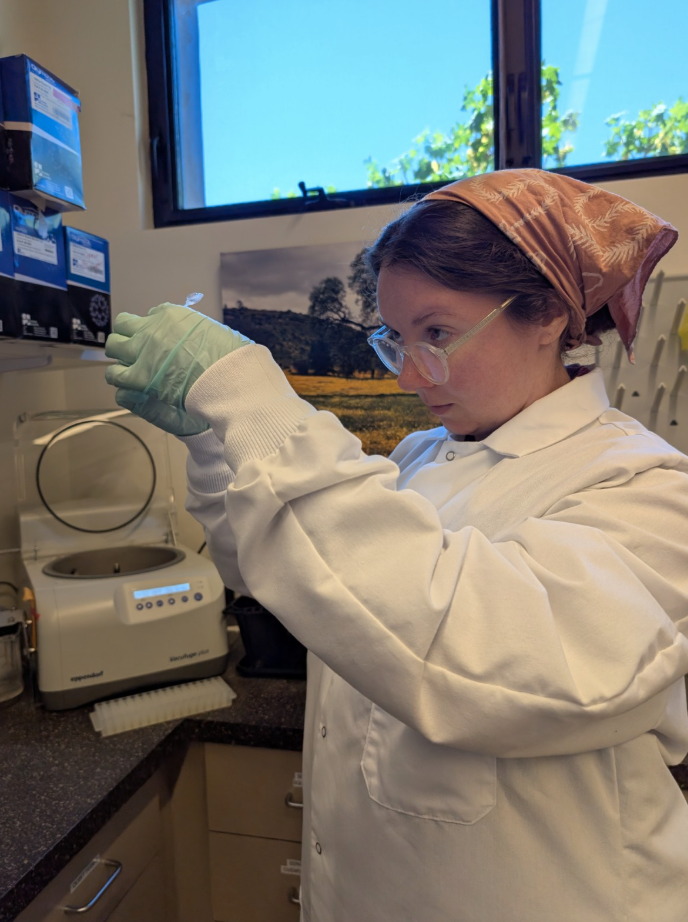
Mae is a recent graduate of Santa Barbara City College, where they studied botany, fire ecology, GIS, evolution, and environmental field science. They first became involved with the Garden as a volunteer, helping with the Elings Park Transformation Project, entering herbarium specimens into the Consortium of California Herbaria, and imaging plant specimens for digitization.
Mae’s interests extend well beyond the field and lab. They tutor biology at SBCC, lead activities for the college’s Multimodal Lab, help organize iNaturalist bioblitzes and native plant hikes through the Biology Club, and create science-focused displays and programming at the Santa Barbara Public Library. Whether they are working with plants, data, students, or community members, Mae brings a thoughtful, creative, and incredibly hands-on approach to the work.
(Photo: Steve Windhager
Ivette Castaneda Garcia
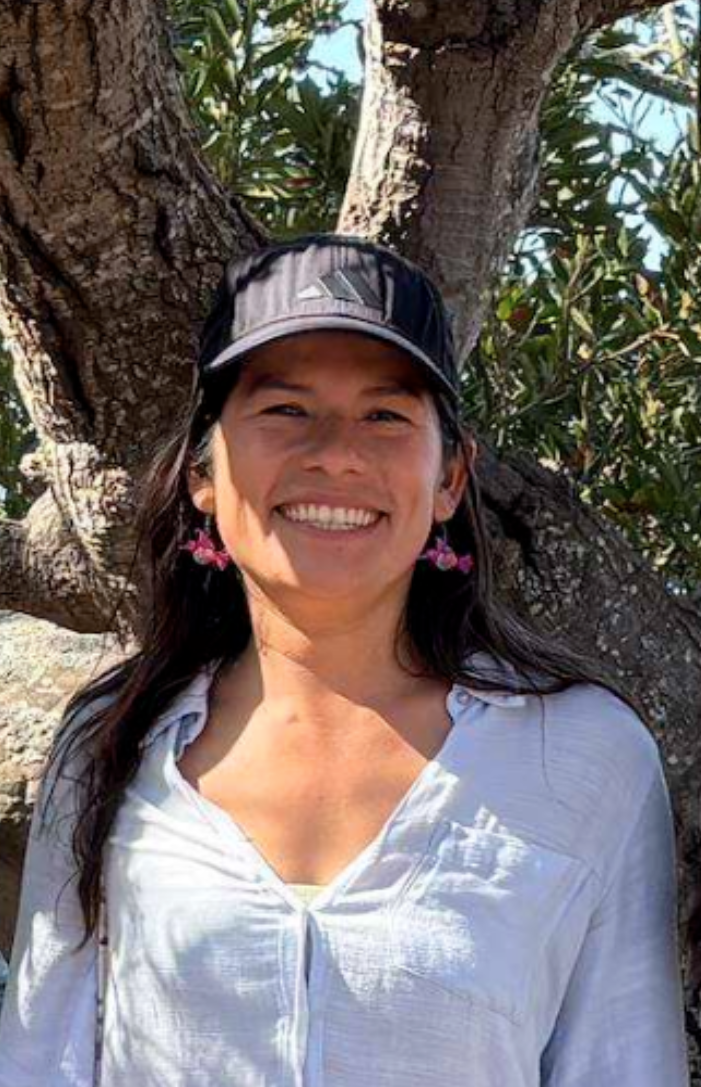
A graduate of the Bren School at UCSB, Ivette brings more than 15 years of interdisciplinary experience in conservation, environmental research, and community-based natural resource management. Her work has taken her across the Andes and Amazon, including roles with the Peruvian government and the Wildlife Conservation Society, where she worked with local communities, researchers, and government partners to better understand environmental challenges and support conservation. In the Peruvian Amazon, she combined field research, GIS, and community knowledge to inform conservation across a program area spanning more than 150,000 hectares.
At the Garden, Ivette is bringing that broad conservation perspective into the world of California native plants. During her internship, she has gained hands-on experience with plant morphology, herbarium specimens, restoration, ecological data, and DNA extraction. She is particularly interested in how field observations, local knowledge, and scientific tools can come together to reveal new dimensions of biodiversity. She enjoys the careful detective work of conservation, from examining tiny features of a plant to finding patterns in a dataset.
Favorite group of organisms: Pollinators, especially bees. My fascination with bees began at home, where my family kept beehives. They were my first introduction to the fascinating relationships between organisms and the ecosystems around them.
Favorite part of the internship: DNA extraction. It gave me a new appreciation for how genomics can reveal aspects of biodiversity that we cannot see with our eyes alone.
Most unexpected takeaway: The microscopic world is full of mysteries and hidden treasures. Looking closely at plants has shown me how much wisdom can be hidden in something that, at first glance, seems simple or familiar.
The Ripple Effects of Invasive Herbivore Removal: A Study on Santa Rosa Island’s Torrey Pines
Updates from Cuyama: Pie, Plants, and a Brush with Fire
Defend the Roadless Rule! Comments due Oct. 6.
Supporting Pollinators and Local Wildlife with Native Plants