Donate
Preparing Your Garden for the Winter Rains
Q&A with Grounds Manager Stephanie Ranes
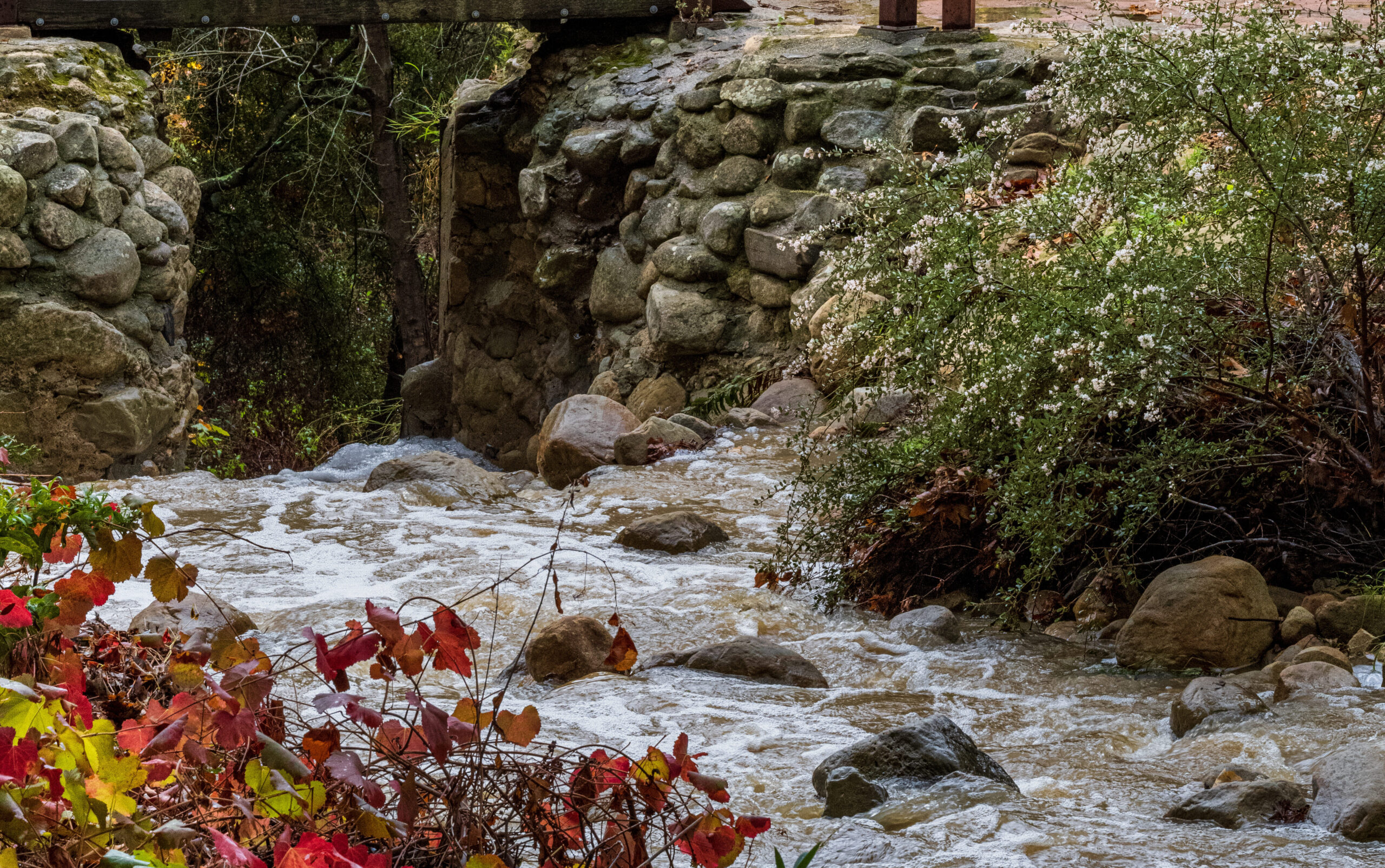
Every year, winter rains bring welcome water to Santa Barbara landscapes, but a strong storm can also mean drainage problems, accelerate erosion, and even put some plants at risk. With a potentially wetter and unpredictable El Niño season ahead, preparing early can help gardeners slow and direct runoff, protect vulnerable areas, and make the most of the rainfall.
At Santa Barbara Botanic Garden, Grounds Manager Stephanie Ranes and its Horticulture and Facilities teams have been planning for the rainy season since late summer. In the following Q&A, we asked Stephanie to share what the Garden is doing to prepare, what homeowners can learn by watching water move through their own landscapes, and how thoughtful plant placement and care can help California-native plants thrive through even the wettest winters.
Mitigating the Impacts of Rain
How is the horticulture team preparing the Garden for the rainy season?
The Garden’s teams have been preparing for heavy precipitation for a few months now. Together, our team walked the grounds and identified potential issues within each garden section and across the Garden’s various buildings and structures. In order of priority, we began addressing each item on our list. We’ve cleaned drains, gutters, and drainage areas. We’ve built effective water bars, a diagonal depression across a trail to prevent erosion by breaking the flow of water to reduce its velocity and depositing it into a desired area across pathways, and cleared extra debris. We’ve also prepared sandbags, installed wattles on steeper, bare slopes, and we’ve improved drainage channels to direct water where we want it to go. We’ve even invested in good rain gear to ensure our teams can navigate the space safely and in comfort.
We are fortunate to have dedicated staff, some who have been with us for more than 10 years and have experienced prior heavy rain events at the Garden. As a team, we can draw on this group’s combined experiences to anticipate and prepare for the potential effects of receiving a lot of water at once.
We also understand that if the rain arrives all at once as predicted, we may not be able to prevent all damage. Several years ago, the bridge across the Garden’s historical dam was significantly damaged when Mission Creek rose so high that water flowed across the entire area and over the dam itself. In situations like this, we prioritize everyone’s safety, including guests, and stay out of an area until the water recedes. The bridge and the Garden were repaired, and everyone remained safe.
What should homeowners look for when assessing how water moves through their garden?
Our Garden team has learned a great deal by suiting up in our rain gear and heading outside during heavy rains. We use this time to observe how water moves through the landscape. This helps us determine where we may need to redirect, disperse, or slow strong flows to protect garden beds and hardscapes. We also learn a lot in the days after a storm. During this time, you can look for erosion channels and small debris flows, which reveal how water has traveled.
Our team walks through each section of the Garden, takes photos, and notes areas that may need additional erosion control before the next storm. Water can move differently depending on the intensity and duration of a storm: Two inches of rain in two hours will affect a landscape differently than two inches over a 12-hour period. Observing your garden during or just after rain is one of the best ways to understand and address water flow issues you may be experiencing.
Recently, we put this effort into practice and redesigned the groundcover section just past the Garden’s main entrance. By adding a dry creek feature that uses a series of basins, sandstone cobbles, and underground drainage, we’re able to slow water down, help it soak into the ground, and guide any excess runoff towards the Arroyo Section. Already, this work has helped us better manage runoff and reduce erosion, enabling us to work with the water, not against it.
What should gardeners do – or avoid doing – before heavy rain?
The best way to prepare for heavy rain is to start early. Gather materials and tools you may need, including shovels, sandbags, and straw wattles. Then walk through the landscape and identify where problems could occur. Could runoff from the street flow across a front path or planting bed? Could a backyard slope funnel water downhill? Are the home’s gutters clean and working properly?
Preparing a garden or landscape for significant rain means anticipating where water may come from and where it may travel. Heavy flows can cause flooding, erode paths or trails, cut channels through planted beds, move debris over plants, or oversaturate plants that need drier conditions. If you have only an hour or two, place sandbags or wattles across areas prone to runoff, or dig water bars to redirect, slow, and disperse heavier flows. These simple steps can help reduce potential damage.
Making the Most of the Fall Planting Season
How do California-native plants respond to seasonal rain, and when can too much water become a problem?
California native plants love winter rain, and nothing will support growth quite like a good shower. Both new and established plants can benefit from even heavy rainfall when they are planted in the right place. White sage prefers a dry, sunny slope, while maidenhair fern thrives near a perennially wet seep. When plants are matched to the conditions they need, a wet winter is not necessarily a problem.
The best time to prevent oversaturated garden beds is well before winter. Create healthy garden soil and good drainage before installing plants. During the rainy season, watch areas where water pools or drains slowly. Many of California’s native plants will not survive those conditions, but riparian species such as Juncus, Carex, and Equisetum tolerate wet soil and may be good choices for those areas.
Is this a good time to plant natives?
Each year is different, but we usually begin planting when the weather cools enough that plants coming out of the nursery will not be scorched by hot, direct sunlight. This is often mid-to late-October or early-November. Planting can be tricky during an especially wet winter. It’s best to look for a dry stretch where you have at least several days after a heavy rain. This ensures you’ll be putting your plants in the ground when the soil is no longer saturated but remains moist.
How should gardeners adjust irrigation during rainy periods and the dry stretches between storms?
At the Garden, we turn off most irrigation for much, if not all, of the rainy season because many of our plants are well-established and do not need supplemental water. However, since the Garden features species from across the California Floristic Province, there are few exceptions.
Plants from Northern California, such as coast redwoods (Sequoia sempervirens), and riparian species, such as stream orchids (Epipactis gigantea), may benefit from additional irrigation during a warm, dry stretch that lasts several weeks. Plants adapted to more rainfall than Santa Barbara Botanic Garden’s annual average of about 18 inches may also need continued irrigation even when other areas of the Garden are receiving enough seasonal rain.
New plantings are another important exception. Late fall is generally the best time to plant because new native plants can benefit from natural rainfall. Even when the surrounding soil retains moisture, however, a recently installed plant may need occasional hand-watering between storms, especially during periods of warm weather. Nursery plants are accustomed to frequent irrigation and need a few weeks for their roots to grow into the surrounding soil. You’ll want to check your new plants every few days by feeling the soil near the stems. If the soil is dry more than an inch below the surface, or the plant appears wilted, it may benefit from supplemental hand-watering.
What is the biggest misconception about preparing a native plant garden for rain, and what one action would you like every reader to take after reading this article?
Every garden has a rhythm shaped by the seasons and the interplay of countless environmental cues. One of the best ways to understand that rhythm is to observe a garden regularly throughout the year and take notes: “this is a hot, sunny corner that may be best for buckwheat.” Or, “water pools here during storms, so a riparian species such as Juncus may be a better fit.”
The best way to prepare a garden for rain, or any other condition, is to plan the design and installation in advance. When the right plant is planted in the right place, it is more likely to thrive, even in a year with heavy rain.
Observe, Prepare, and Adapt
Preparing for winter rain begins with paying attention to how water moves through your landscape and how your plants respond. A little observation and advance planning can help protect your garden while allowing California’s native plants to benefit from the season’s rainfall. Whether you are planting your first native garden or have years of experience, the Garden team is always happy to be a resource and help you learn, adapt, and grow successfully at home.
In the Nick of Time: Serendipitous Seed Collection During Fire Season
The Science Behind It All
Putting Pollinators First Through Art: A New Way to Design Gardens

What the Torrey Pines Are Trying to Teach Us