Donate
First Goldspotted Oak Borer Blitz at San Marcos Foothills Preserve
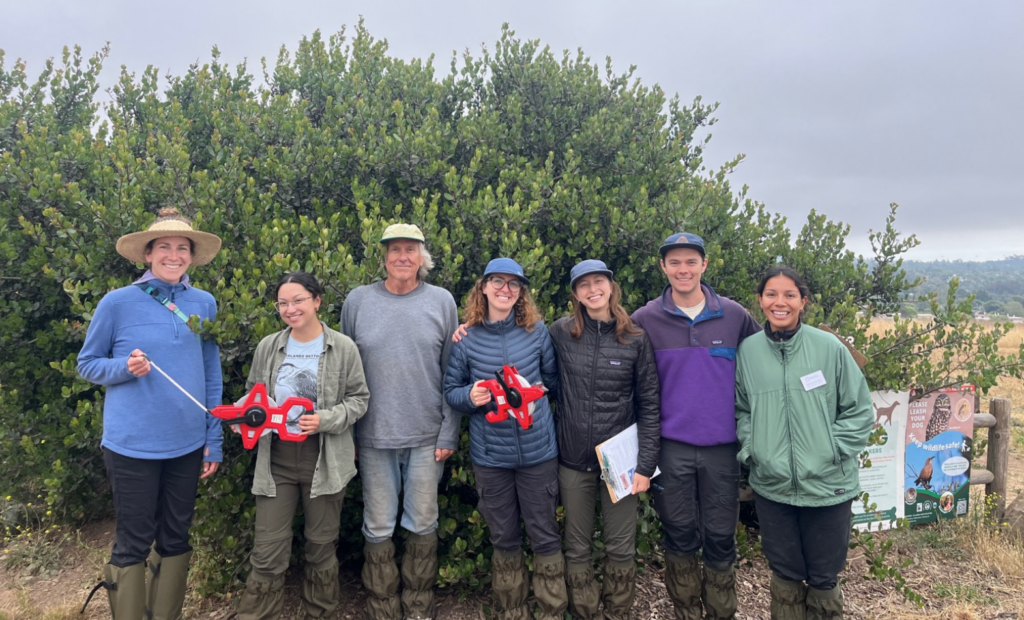
On May 12, 2026, the Santa Barbara Botanic Garden partnered with Channel Islands Restoration and University of California Agriculture and Natural Resources (UC ANR) to host its first Goldspotted Oak Borer (GSOB) Blitz and training event at the San Marcos Foothills Preserve.
Six volunteers joined Garden staff, along with representatives from local environmental organizations and the Fire Safe Council, to learn how to identify this destructive beetle and monitor the health of local oak woodlands.
The good news: no evidence of the Goldspotted Oak Borer was found at the preserve. While reassuring, the result also highlights why continued monitoring is so important. Southern Santa Barbara County sits near the northern edge of the beetle’s known range, making this region especially important for early detection and prevention efforts.
This event marked an important first step in building a local network of trained community members who can help monitor oak forests and detect GSOB before it spreads farther north along California’s coast.
You can learn more about GSOB, view the regional monitoring results, and support ongoing efforts by becoming a volunteer. Click here to get started.
What is the Goldspotted Oak Borer?
The Goldspotted Oak Borer (GSOB) is a small, non-native beetle that has caused widespread oak mortality in Southern California. Adult beetles are only about the size of a grain of rice, but their larvae can severely damage trees.
The beetle was first detected in California in 2008 and is believed to have arrived in infested firewood transported from Arizona, where the species is native. Since then, it has spread primarily through the movement of infected oak firewood.
GSOB mainly attacks two native oak species:
- Coast live oak (Quercus agrifolia)
- Canyon live oak (Quercus chrysolepis)
These trees are foundational species in California’s coastal and foothill ecosystems. Once GSOB becomes established in an area, infestations can persist for years before noticeable damage appears.
How Goldspotted Oak Borer Kills Oak Trees
GSOB kills trees slowly over time through repeated infestations.
Adult beetles lay eggs on oak bark. After hatching, the larvae tunnel beneath the bark and feed on tissues responsible for transporting water and nutrients throughout the tree. As this damage accumulates, trees gradually weaken and decline.
Common signs of infestation include:
- Thinning or browning canopies
- Dead or dying branches
- Dark staining on the bark
- Small “D-shaped” exit holes where adult beetles emerge
Because oak trees decline slowly, infestations can go unnoticed for years before symptoms become obvious.
Why Early Detection Matters
Oak trees are a cornerstone of Southern California ecosystems. They provide habitat for wildlife, support pollinators, stabilize soils, store carbon, and help define the landscapes of our region.
GSOB is especially concerning because it can kill otherwise healthy, mature trees. In heavily infested areas of Southern California, entire stands of oaks have been lost.
Santa Barbara County is especially important because it lies between areas where GSOB is already established and regions farther north where it has not yet been detected. Monitoring here acts as an early warning system and may help slow or prevent the beetle’s continued spread along the Central Coast.
A Hands-On Training in Early Detection
The Blitz was designed as a practical, field-based introduction to oak health monitoring and GSOB detection.
The day began with an overview of:
- GSOB biology and life cycle
- How the beetle spreads
- Signs and symptoms of infestation
- Why early detection is critical
Participants then worked with field materials provided by UC ANR, including:
- Reference specimens of adult and larval GSOB
- Visual guides showing bark damage and exit holes
- Comparison collections of native and non-native beetles commonly found in oak habitats
These resources helped volunteers distinguish GSOB from harmless insects that naturally occur in oak ecosystems.
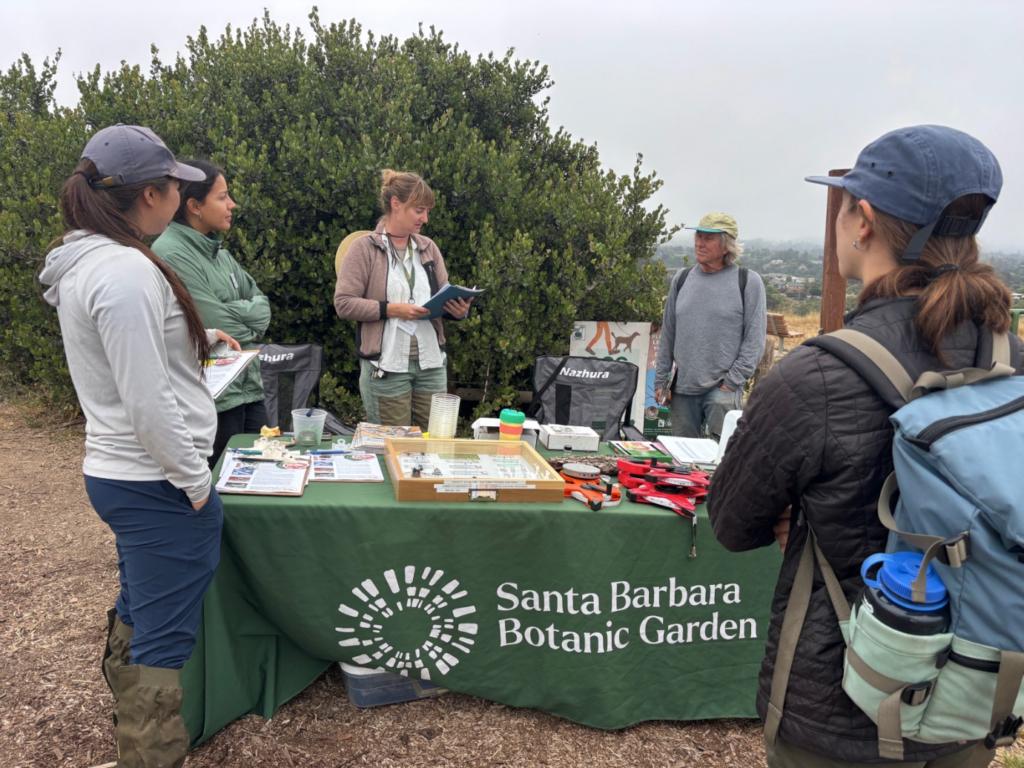
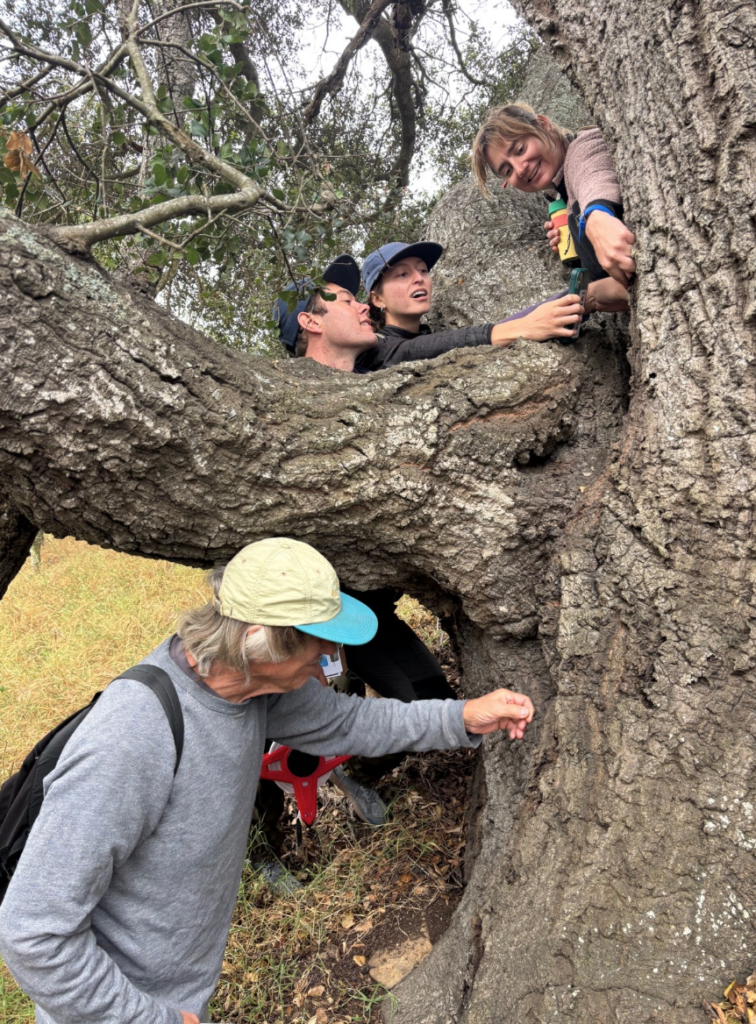
alongside other beetle species. (Photo: Lauren Harris)
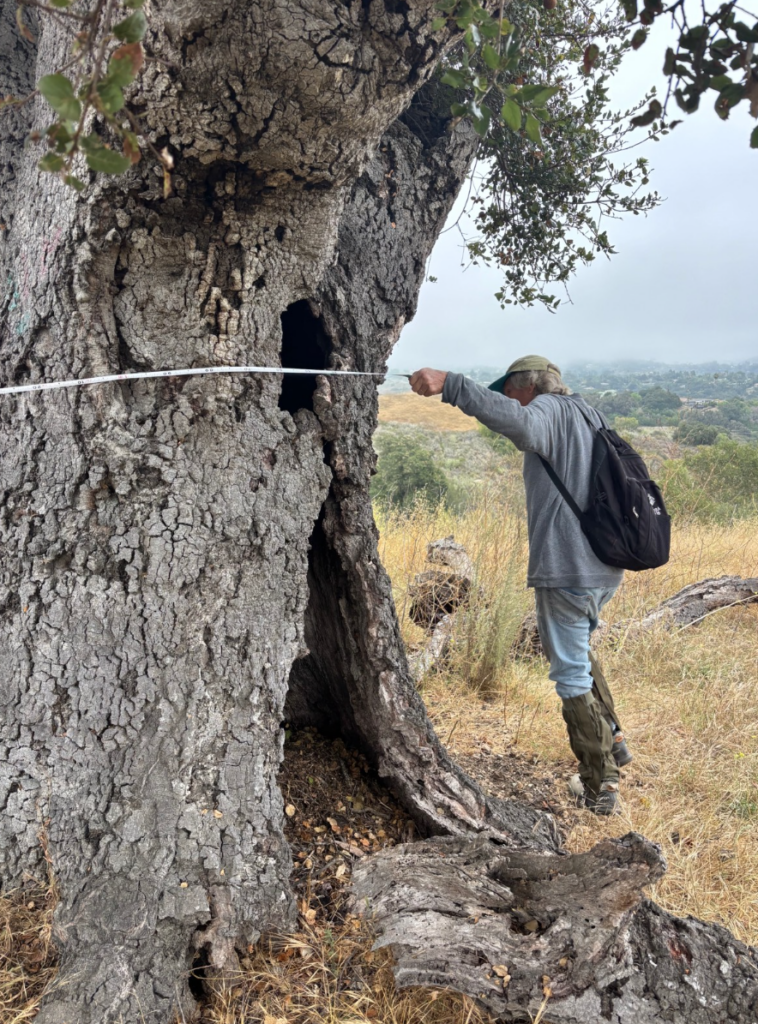
After the training, participants surveyed oak trees throughout the preserve. Working in a small group, volunteers carefully examined trunks and lower branches, documenting tree condition and recording standardized observations.
Contributing to a Regional Monitoring Effort
All observations from the Blitz were submitted to the UC ANR GSOB monitoring dashboard, which helps track where the beetle is present and where it is not yet established.
This type of community science plays an important role in early detection. Professional survey teams cannot monitor every canyon and watershed, but trained volunteers can greatly expand the reach of monitoring efforts across the landscape.
Even surveys that find no infestation are valuable. Knowing where GSOB has not been detected helps conservation organizations prioritize prevention and response efforts.
For the Garden, this work is part of a broader conservation strategy focused on identifying ecological threats early and protecting California’s native oak woodlands.
You can access this dashboard here.
Community Science on the Front Lines
Community science is one of the most effective tools for tracking emerging environmental threats. With basic training, volunteers can collect meaningful data that directly supports conservation and land management decisions.
Beyond data collection, participants also gained a deeper understanding of oak ecology and forest health. Careful observation helps communities recognize environmental changes early, even before major impacts become visible.
How You Can Help
You do not need to be an expert to support GSOB monitoring efforts. Here are a few simple ways to help:
- Do not transport oak firewood long distances. Buy and burn locally whenever possible.
- Learn the signs of infestation, including D-shaped exit holes, thinning canopies, and unusual bark staining.
- Report unusual oak decline to local land managers, conservation organizations, or through platforms such as iNaturalist.
- Join a future GSOB Blitz or monitoring event to receive hands-on training in oak health monitoring.
Looking Ahead
The May 2026 Blitz was a successful first step in expanding local monitoring efforts in the Santa Barbara region. It demonstrated how science, public participation, and hands-on field learning can work together to address emerging ecological threats.
The Garden plans to host additional GSOB monitoring and training events next year, with future programs likely centered around Earth Day in April to engage an even broader community of participants.
To stay informed about upcoming events and conservation programs, join the Garden’s mailing list and follow monthly updates from the conservation team.

What the Torrey Pines Are Trying to Teach Us
The Ripple Effects of Invasive Herbivore Removal: A Study on Santa Rosa Island’s Torrey Pines
Updates from Cuyama: Pie, Plants, and a Brush with Fire
Defend the Roadless Rule! Comments due Oct. 6.