Donate
Layers of Habitat
Garden Design To Support the Web of Life
Part 1: Design for Wildlife and Beauty With Layers
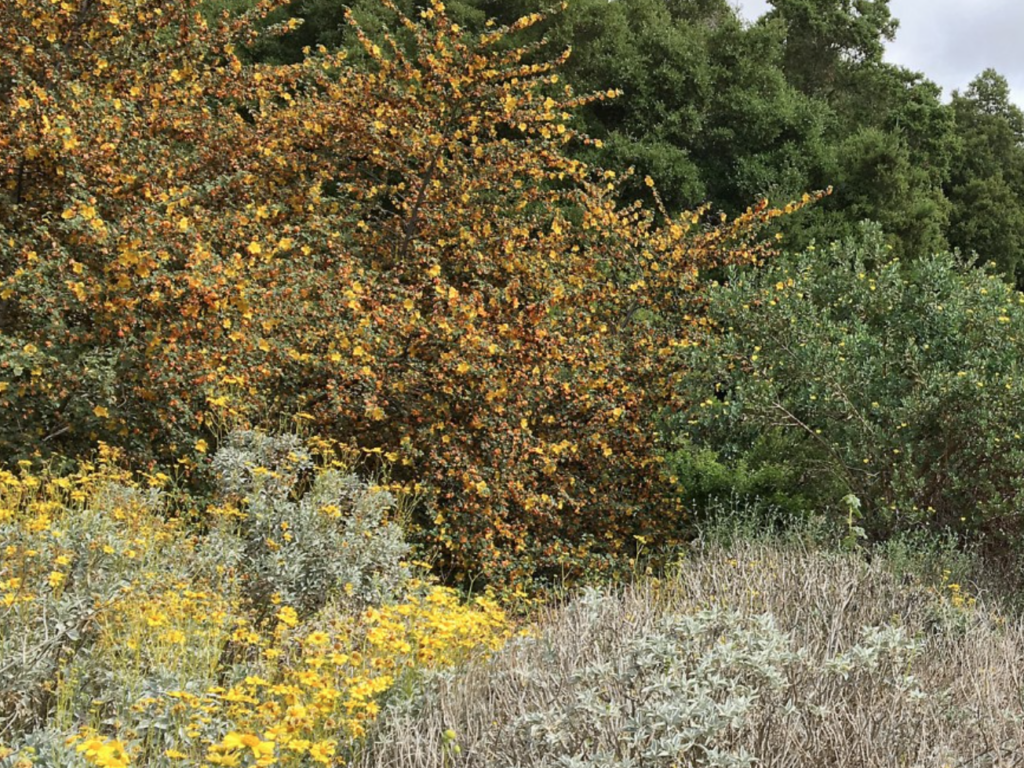
Some of the most diverse and interesting habitat gardens I encounter use habitat layers, massing, and strategic plant palettes to great effect. Ecologically, building three-dimensional (3D) structures in our gardens helps us support the web of life. Aesthetically, the concept of habitat layering unlocks tools for achieving attractive and functional garden design. By playing with layers of habitat through scale, texture, and diversity, we can build successful gardens for both people and wildlife.
From the Ground Up: Four Layers of Habitat
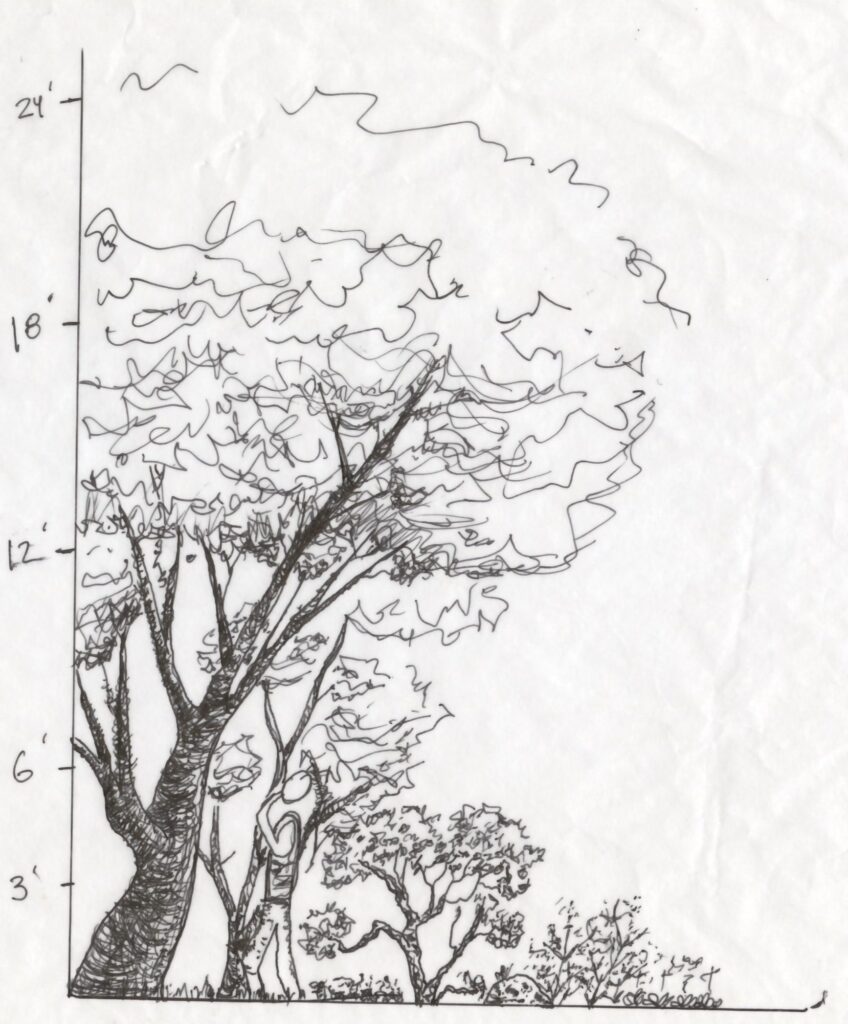
So, what are the layers that contribute to 3D structure and ultimately create habitat? As with many concepts, you can find a variety of categories and definitions depending on whom you ask. Personally, I tend to think of four “layers” to consider when designing: ground, subshrub, shrub, and canopy.
1. Ground | 0 to 6″
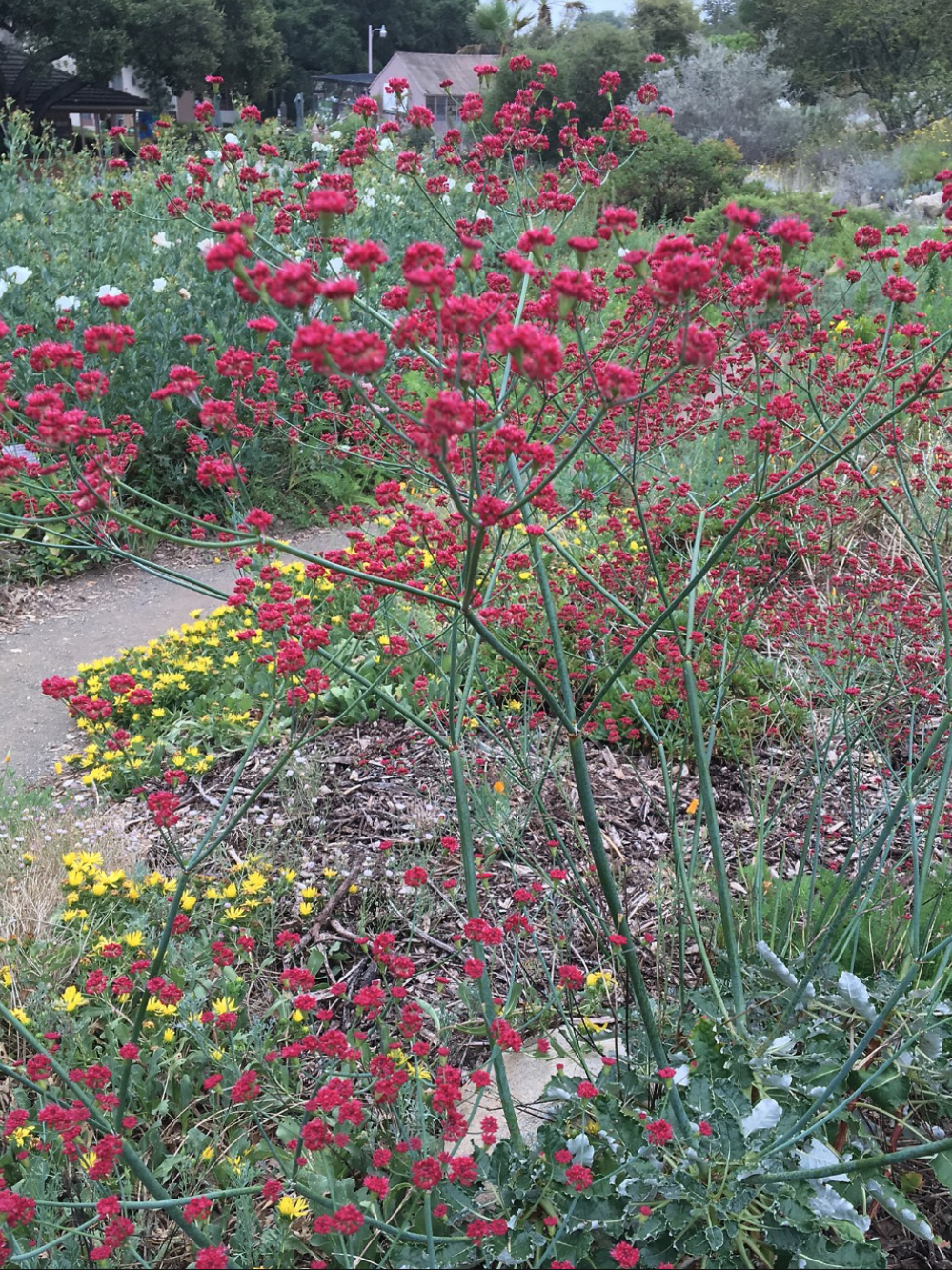
It all starts with your substrate. From your soil conditions to your circulation pathways for foot/car/bicycle traffic, understanding your ground layer will drive your garden design. From a habitat perspective, the ground layer is also a critical location for foraging and nesting among insects, birds, mammals, and reptiles. Some key considerations in the ground layer are:
- Will you use mulch? Mulch is a great way to add biomass to your garden, which will decompose and feed a soil ecosystem that will support plant growth and habitat. Mulch can help with weed suppression, moisture retention, and reduce erosion. The various creatures that take up residence in mulch can also become important food sources for birds, reptiles, and mammals.
- Even the lowest-lying plants, such as wildflowers and the most diminutive herbaceous perennials, can have high habitat value for invertebrates and vertebrates alike.
- While mulch has many benefits, some amount of bare soil can provide a nesting substrate for organisms like native bees (family Apoidea), ant lions (family Mermeleontidae), and others.
- Speaking of nesting, there are several common native birds to our region that nest on the ground, including spotted towhee (Pipilo maculatus), dark-eyed junco (Junco hyemalis), California quail (Callipepla californica), and even orange-crowned warbler (Leiothylpis celata).
Native Plant Recommendations for the Ground Layer
- Wildflowers, including California poppy (Escholzia californica)
- Gilia (Gilia spp.)
- Coral Bells (Heuchera spp.)
- Redflower Buckwheat (Eriogonum grande rubescens)
- Gumweed (Grindelia spp.)
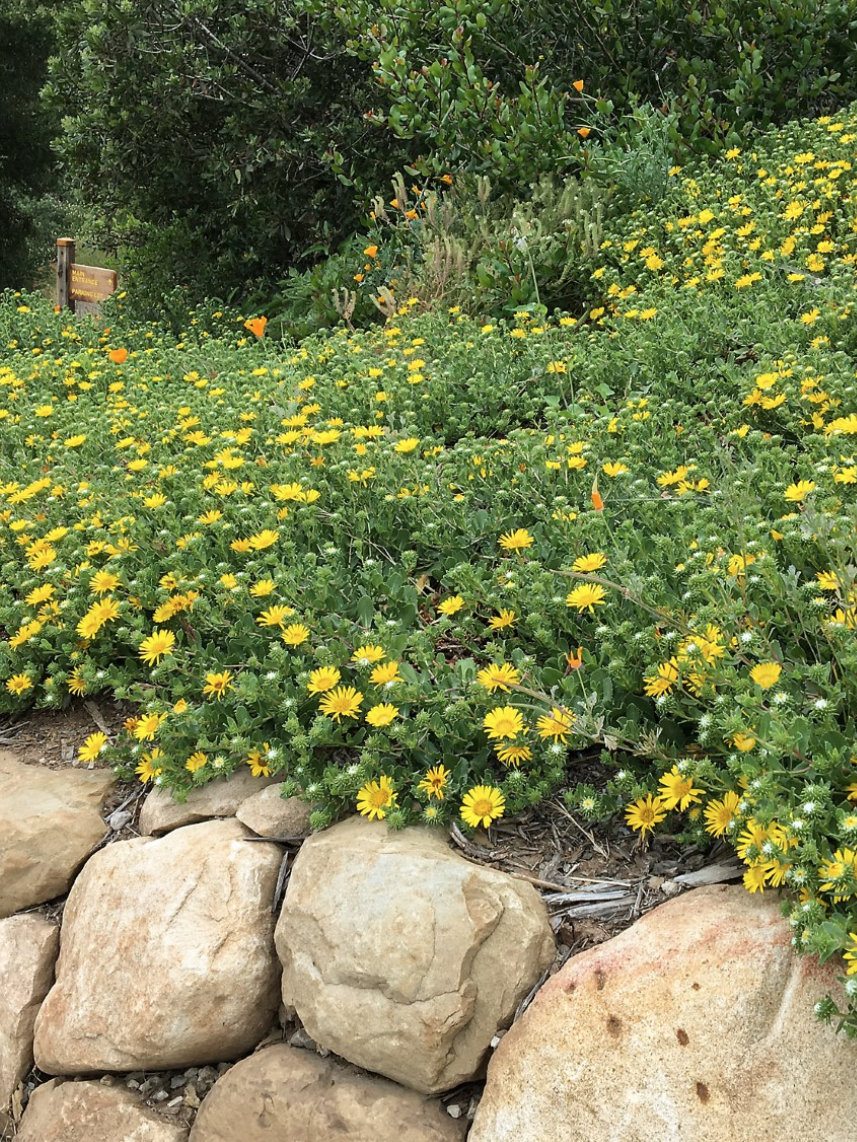
2. Subshrub | 6″ to 20”
Just above the ground layer is the zone I will call the subshrub layer. This is where many of our annual plants, herbaceous perennials, and low-growing woody perennials, such as ceanothus ‘yankee point’ (Ceanothus ‘Yankee Point’), will be planted. Many of these plants provide important nectar sources for pollinators.
Within this layer, we can start to consider a tool that is extremely important for wildlife, especially birds and mammals in all habitat layers: shadows. Dark areas and shadows are critical for escaping predators. Imagine a group of white-crowned sparrows feeding in an open area of your yard. When they perceive any threat, I have observed that they flee toward the darkest places they can find. If you’ve provided structure in the subshrub layer, this will afford many immediate escape routes with easy access to the food source, especially for ground-feeding birds and lizards.
Often, it is the interaction between layers that creates habitat value. Remember the ground-nesting birds mentioned in the last section? They are not likely to nest in your yard if you don’t have cover for them to nest underneath. Otherwise, their nests will be exposed to predators.
Native Plant Recommendations for the Subshrub Level
- Native grasses (Family: Poaceae)
- ‘Canyon Gray’ Coastal Sage (Artemisia ‘Canyon Gray’)
- ‘Pt. Sal’ Sage (Salvia leucophylla ‘Pt Sal’)
- ‘Pigeon Pt.’ Coyotebrush (Baccharis ‘Pigeon Pt.’)
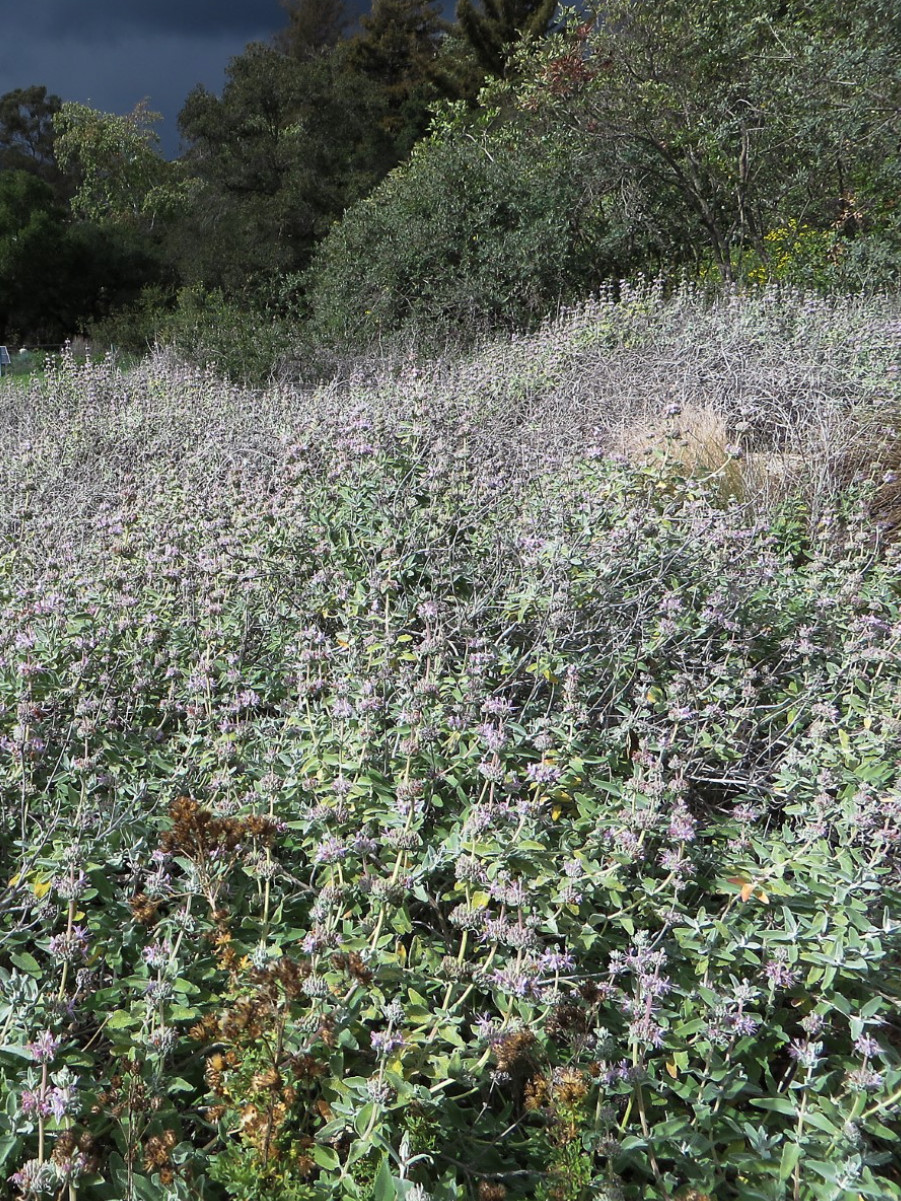
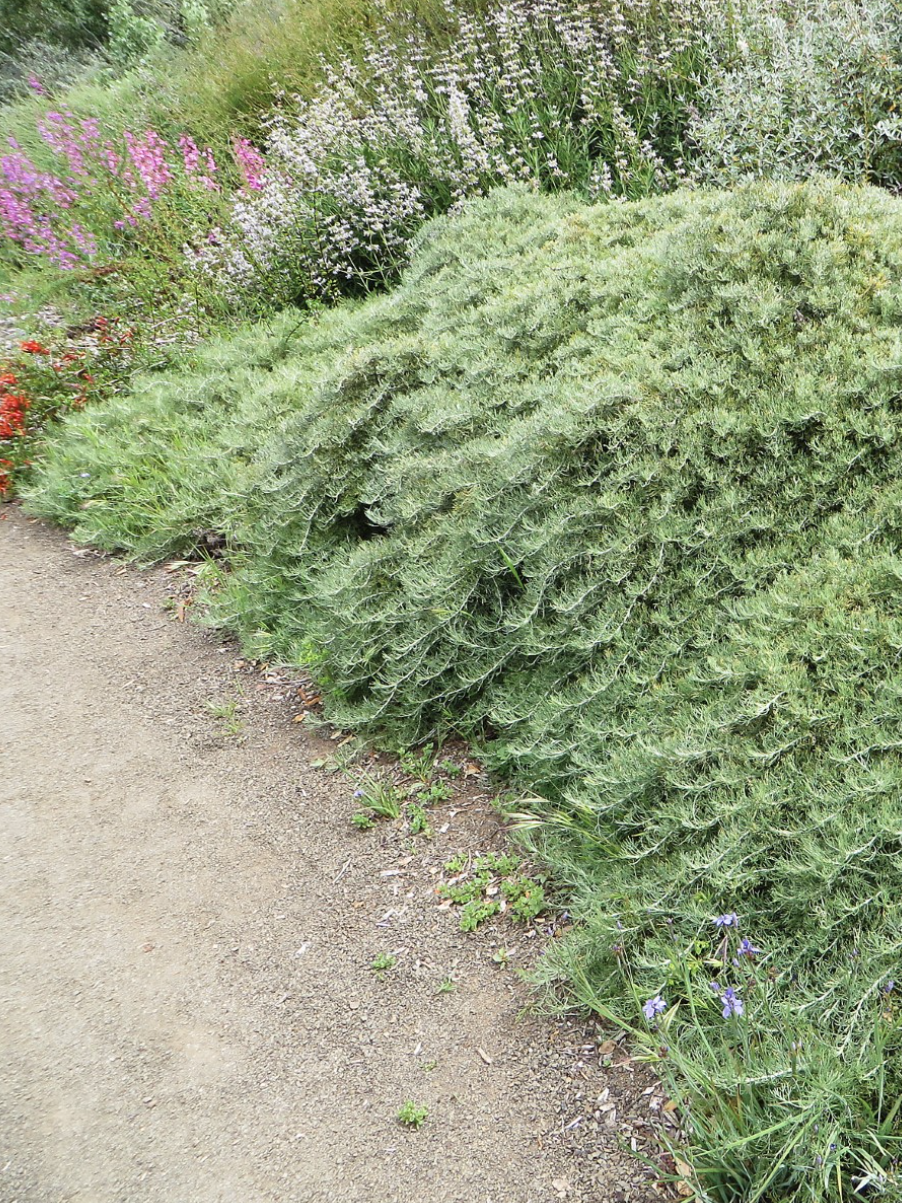
3. Shrub | 20” to 12’
In the shrub layer, from about two feet to approximately twelve feet high, many of the principles already discussed become amplified. This is where a variety of branching patterns, shadows, and foliage types can provide habitat for insects and birds, primarily.
Commonly, gardeners will find a variety of birds in the shrub layer, including bushtit (Psaltriparus minimus), orange-crowned warbler (Leiothylpis celata), and blue-gray gnatcatcher (Polioptila caerulea). The shrub layer is where many birds nest, including the aforementioned gnatcatcher, California towhee (Melozone crissalis), Anna’s hummingbird (Calypte anna), California scrub jay (Aphelocoma californica), and others.
This zone is also where plants begin to provide shade for humans. Here, a garden designer can also incorporate the concept of “nurse plants” into their garden. These nurse plants’ shade, deeper leaf litter, and protection can facilitate the growth of other, more sensitive plants.
Native Plant Recommendations for the Shrub Layer
- Honeysuckle (Lonicera spp.)
- Concha Ceanothus (Ceanothus ‘Concha’)
- Currants/gooseberries (Ribes spp.)
- Saltbush (Atriplex spp.)
- Lemonadeberry (Rhus integrifolia)
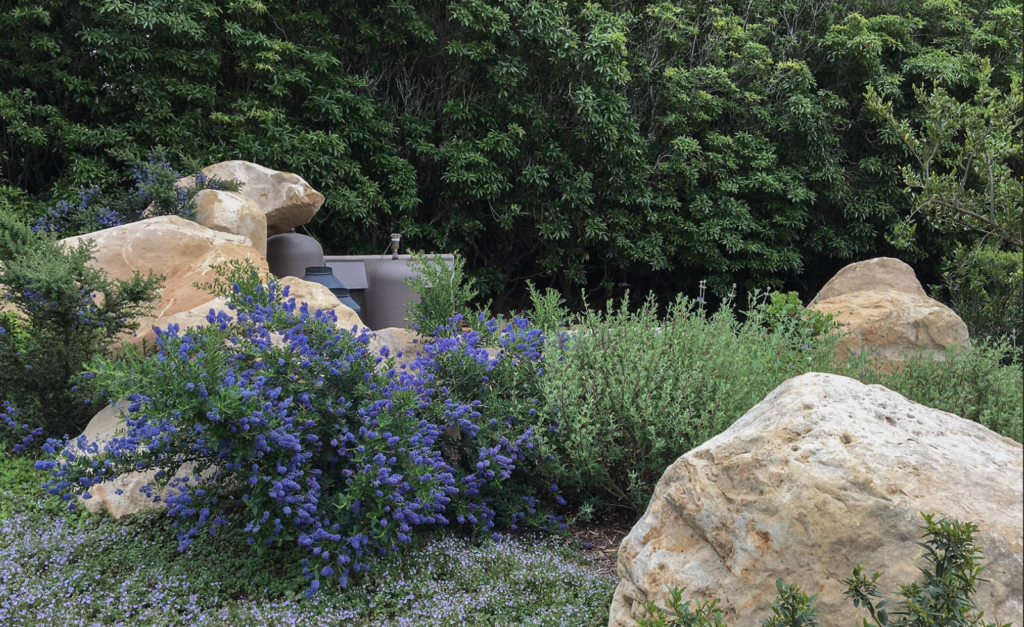
4. Canopy | Over 12’
Picking a favorite habitat layer is like picking one’s favorite kind of ice cream. So many are worthy, it seems a shame to just have to choose one! That said, given the amount of time it takes to develop and the value it provides, the canopy layer is about as precious as it gets. A true canopy is the result of mature plantings, which could take decades to develop. Once established, a canopy layer provides an incredible substrate for biodiversity to thrive.
In many ways, a mature tree canopy is a microcosm of all of the principles already outlined. If we imagine a tree with a 20, 30, or 40’ canopy spread, all of that surface area is creating incredible 3D structure for a wide variety of organisms to forage, nest, and hide. Moreover, the various facets and aspects of leaf orientation and branching structure create a variety of microclimates that support an array of life.
For instance, several migratory warblers (family Parulidae) are well-known for their “niche partitioning.” In other words, different species have evolved to prefer different parts of the canopy architecture for their foraging. Some, like the yellow-rumped warbler (Setophaga coronata), may stay on the outside of the canopy, occasionally flying out into the air to catch insects on the wing. Others, such as orange-crowned warbler, will occupy interior canopy habitat and stay in lower levels of the canopy, gleaning insects off of leaves and branches. Still others will hug large stems and feed closer to the bark of the tree.
As we’ve seen with the shrub layer and ways the protection of a shrub can serve as a nursery for other plants, the shade of a tree can have similar impacts. This includes providing passive cooling for humans on a hot day by reducing evaporation and allowing moisture to stay underneath the leaf litter for invertebrates and fungi to thrive.
That said, a canopy layer may not be practical for some home gardeners to expect to develop, given space or time limitations.
Native Plant Recommendations for the Canopy Layer
- Oak trees (Quercus spp.)
- Elderberry (Sambucus mexicana)
- Desert Willow (Chilopsis linearis)
- Catalina Cherry (Prunus ilicifolia lynoii)
- Bigleaf Maple (Acer macrophyllum)
Putting it all together
So how do we take these principles and apply them to our yards? Often, the answer to this question is site and context-specific, but there are a few steps you can take to assess, plan, and create successful layers of habitat.
- Start by assessing your canopy layer. Since this will likely take the most space on your site (oak trees can have a spread of up to 50’, even smaller trees will likely have a canopy spread of 20-25’) and will definitely take the longest time to develop, it is helpful to consider your ability to support a canopy layer. If you are redesigning a site and already have a mature canopy, ask whether it needs to be removed. If you cannot develop a canopy layer for lack of time/space/other, what is the next well-developed layer you can cultivate?
- Think about your ground plane and substrate (surface material- bare ground, mulch, gravel, etc.). Are you going to have a uniform substrate across your site? Will you leave any patches of bare soil for nesting insects or burrowing animals? Plan those areas out so you can be intentional about bare patches.
- Consider creating islands of habitat. It doesn’t take a lot of space to successfully integrate a few habitat layers into a concentrated planting. By combining a subshrub planting with some shrubs, you can create a pocket of great habitat where an organism such as a hummingbird or Bewick’s wren (Thryomanes bewickii) spends most of its life.
- If you live in an area with high fire risk, you might have to think about your layers somewhat differently. While the ecological principles mentioned in this article will all apply, you will want to be conscious of horizontal and vertical fire “ladders.” That is, plantings that are horizontally dense and exhibit tight vertical layering can increase the rate of spread and difficulty to fight the fire, which can compromise homes and other structures. In this case, reference the defensible space zones to keep you in compliance with local laws and fire-safe principles. The bottom line is that designing islands of habitat, keeping them separate from one another, and keeping dense layers of habitat away from your home are all ways to minimize fire risk.
- Remember your own comfort and enjoyment. Pathways for walking, sight lines into, through, and beyond your yard, and “outdoor rooms” all present opportunities to combine habitat value and human use. Using layers of habitat and planting can help define these design features.
Establishing an interplay between the four layers of habitat is one of my favorite aspects of design. This is a rich space where gardeners can consider key elements of design, including how the scale of plants relate to one another, buildings, and people; how plants can help define major and minor spaces; and how we want to paint our “canvas” with color and texture.
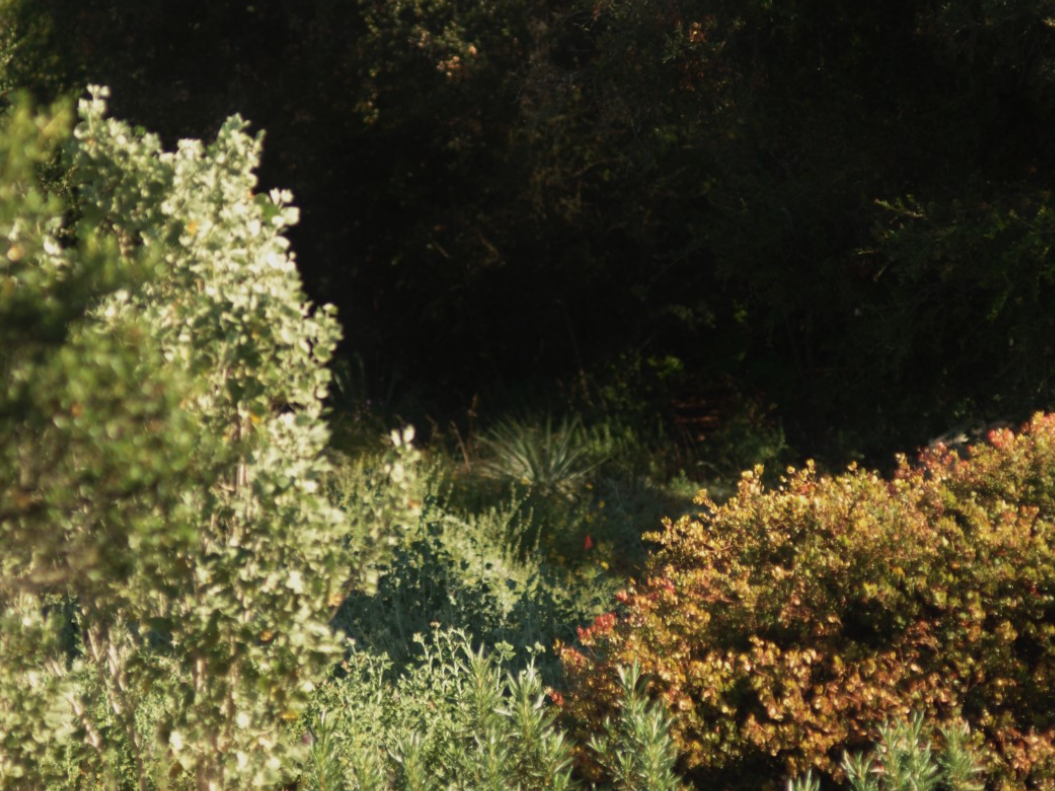
When creating habitat gardens, it is critical to provide physical structure in the form of diverse heights, masses, and shadows. Birds, insects, and other wildlife will utilize the One corollary to the principle of 3D structure is that the absence of structure can also be a design tool. In the parlance of aesthetics, this is negative space. Ecologically speaking, one of the most potent negative spaces we can work with are edges. Imagine a field of low-lying plants such as grasses or wildflowers. In such an open space with limited 3D structure, there is going to be a particular group of insects/birds/mammals/reptiles for whom those conditions are ideal. Now, imagine a dense woodland creating a border around that open field. The woodland will also have its own suite of organisms that prefer denser habitat.
At the edge, where these two conditions meet, we are typically going to find a zone of overlap, where organisms from each condition (open field and woodland) are going to start interacting. Often, these edges (sometimes referred to as ecotones at the landscape scale) are where species richness — the number of distinct kinds of organisms in an area — is particularly high.
When we garden with layers of habitat in mind, the interplay of dense planting, edge, and open space becomes a tool for building habitat, exploring form, and adding interest for all creatures.
Play with seasonality. Some plants either have an annual growing cycle or can be heavily pruned annually to make your habitat more dynamic and highlight different views or sight lines. For instance, a plant like matilija poppy (Romneya coulteri) will produce dense, vertical stalks each year during its growing season, creating a dense screen. That structure will support perching birds, support some number of invertebrates- including the moth Neoterpes edwardsata, a creature with a particular taste for members of the poppy family.
Later in the year, a gardener will likely cut back most or all of the aboveground growth, opening up a sight line that had been blocked by the poppy. Other plants, such as grasses like deergrass (Muhlenbergia rigens) or giant wildrye (Elymus condensatus), can be treated in a similar way.
During an undergraduate life science course, I was introduced to a concept that has profoundly shaped the way I look at nature. As the warm air and dim lights of a massive lecture hall had me on the verge of dozing off, an image of a kelp forest was projected onto the large screen in front of the room. The professor rhetorically asked, “Why are kelp forests and coral reefs such biodiverse systems?”
The answer was that the 3-dimensional (3D) structure of those communities creates space (surface area) for a wide variety of organisms to find food, shelter, and reproductive habitat. I find myself reflecting on this principle often when I am thinking about gardening and landscape management.
The Ripple Effects of Invasive Herbivore Removal: A Study on Santa Rosa Island’s Torrey Pines
Updates from Cuyama: Pie, Plants, and a Brush with Fire
Defend the Roadless Rule! Comments due Oct. 6.
Supporting Pollinators and Local Wildlife with Native Plants