Donate
Culture, Community & Conservation | How Mary Galindo of Latino Outdoors Inspires Change
I met Mary Galindo in early 2025 at Santa Barbara Botanic Garden, when we hosted a networking event for the South Coast Hispanic Chamber of Commerce. She and I hit it off instantly, and it became apparent that a new and potentially impactful relationship was about to begin.
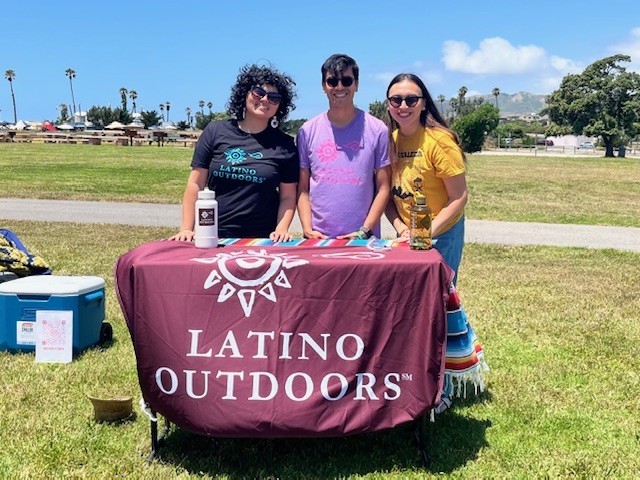
A Santa Barbara native with an outgoing personality, Mary explained to me her role as regional volunteer for Latino Outdoors, a national conservation organization dedicated to getting Latinos of all ages into the great wide open. When not volunteering with Latino Outdoors, Mary is also the lead educator and registered dietitian for Rooted Santa Barbara County, a community-powered nonprofit transforming health through fiber-forward nutrition and lifestyle-based approaches to preventing and improving chronic disease.
Mary’s energy and enthusiasm for her community — and her clear love for the outdoors and nature — is evident and made her a perfect match for the Garden as we continue growing the native plant movement. So, she and I started brainstorming ideas for how to engage Latino Outdoors members with the Garden’s advocacy work, and I soon asked her to join our Impact and Advisory Committee (she said yes!) where we could best put her ideas, skillsets, and expertise to work in support of our mission.
The following is a brief interview with Mary where I learned about her background, interests, and what motivates her to support her community and culture.
Tell me about your own connection to nature. What inspired your love for nature, and how did you get interested in native plants?
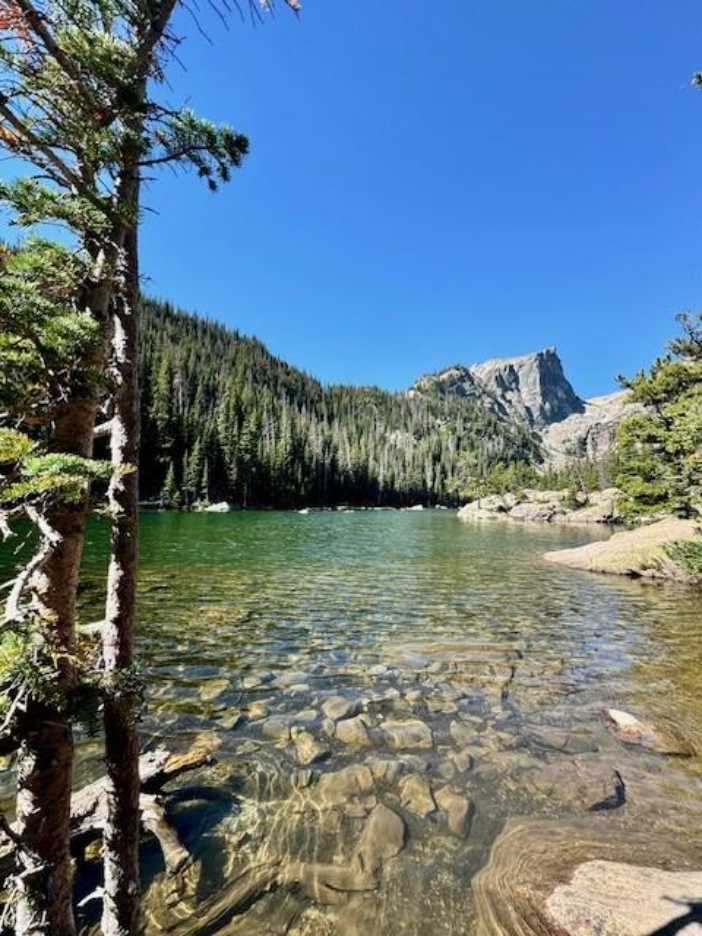
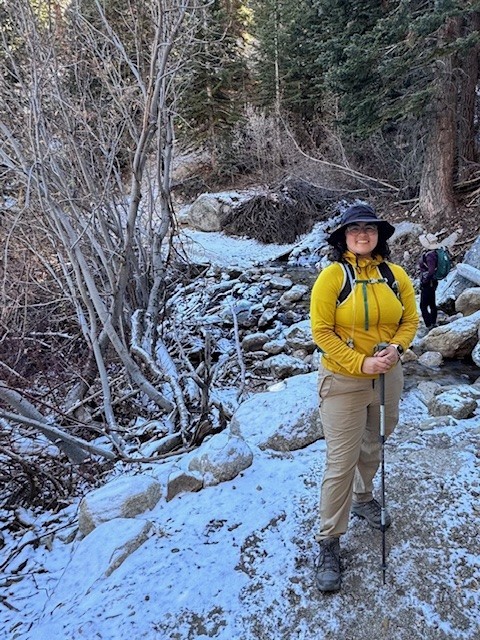
My connection to nature began about nine years ago through my many hiking and camping trips. Especially with camping, I found myself in areas deep in the mountains, far from the rush of the city, where I connected all my senses to the outdoors. I noticed the massive mountains and the tiniest bugs, the calming sound of the water and the chirps of the birds, and I experienced emotions like awe, wonder, gratitude, joy, and calm. On my first camping trip, I became very aware of how much trash I produced because I had to collect it until we left, and I saw how trash left behind could impact wildlife and the surroundings for others. This made me more aware of how my actions could deter or attract wildlife, and later I learned how our daily actions impact these beautiful places, the wildlife, and even the water supplies.
Ever since I started volunteering with Latino Outdoors Ventura, native plants were often mentioned and their benefits highlighted. A year ago, I started birding and participated in birding walks with groups like Oxnard Birders Club, field trips to Joshua Tree with Isaias Hernandez, and learning online with Oxnard MiniNature Reserve, all of which emphasized the importance of native plants not only for birds, but for fire and erosion prevention, water conservation, and the climate. This added another layer of connection to the outdoors through my new interest in birding. I often did not see myself represented in these spaces, so I feel fortunate to have learned about native plants from educators with similar experiences who include intersectionality, nuance, and recognition of the first indigenous stewards of the land.
In your role with Latino Outdoors, what are some of the things you’re trying to accomplish?
Latino Outdoors inspires and connects comunidades to the outdoors, centering cultura, celebrating familia and heritage, and uplifting our history and leadership as part of the outdoor experience. I remember my experiences in nature were usually a result of someone introducing me to a new place and sharing their knowledge. I wasn’t shamed for not knowing something or not having the right gear. This is the kind of positive experience I want to provide, especially for those who are experiencing it for the first time.
I strive to foster community and create a relationship with nature, whatever that looks like, for each person. Getting outdoors does not always mean a rigorous hike. It could be looking outside the window, listening to the birds in the backyard, having a picnic at the park, roller skating outside, noticing the clouds in the sky. By offering various activities free of charge, we hope to increase access to nature and help others find the outdoors in the way that fits them best.
Are there any policy actions or activities that you think can help inspire more people to plug into the conservation movement? What about Latinos specifically?
I recently participated in a scavenger hunt at Arroyo Hondo with the Santa Barbara Land Trust, and it reminded me how effective playful, accessible learning can be. The activity included photos of what to look for in nature and simple questions to answer, which helped focus my attention, spark curiosity, and create a sense of accomplishment as I checked things off the list. As adults, we rarely get opportunities to learn in this way, yet experiences like this make conservation feel approachable and memorable. Incorporating these kinds of interactive, bilingual, all-ages activities into public lands programs and environmental education can be a powerful way to introduce conservation concepts and build long-term engagement.
As a Latina, I have often felt imposter syndrome within the conservation movement, and that feeling can be a real barrier to participating in policy-related actions. What has helped me most is doing things in the community. Recently, that looked like gathering a group of people on Zoom so we could call our elected representatives together. Many of us were anxious but doing it as a group made it feel less intimidating. We supported each other, celebrated afterward, and realized it wasn’t as scary as we expected. Creating more bilingual, group-based, guided opportunities for civic engagement — like collective calls, workshops, or community-led policy actions — can help more Latinos feel confident, supported, and empowered to participate in conservation advocacy.
Can you suggest one or two ideas for how we can grow the native plant movement?
One idea is to weave information about native plants into everyday outdoor activities. I once went on a walk around a neighborhood where it was pointed out that most of the plants were not native. That simple observation made me realize this wasn’t something I had ever really considered or thought about. I even felt embarrassed to ask what “native” meant, but the explanation that followed opened a door I couldn’t close. Including this kind of information in walks, hikes, and other outdoor activities can create awareness, spark curiosity, and help people connect native plants to their daily lives.
Another idea is creating an easy, accessible roadmap for including native plants that reduce barriers and focus on small, achievable actions. This could look like mini classes, Instagram posts, or workshops that explain where to start, the common speed bumps people might hit, and practical solutions. Having a clear place or person to ask questions and troubleshoot — similar to a master gardeners’ program — would make it easier for more people to feel confident taking their first steps.
Do you have any native plants at home?
I actually don’t have any (that I know of) at home. I am really new to native plants and am at the point that I want to start integrating them into my life. I will be honest: I feel some level of overwhelm with where to start and question whether I will be able to keep them alive! 2026 will be the year I will take small steps and lean on the people and organizations around me to support me in my journey (hint, hint Botanic Garden!).
What’s your favorite ‘nature spot’ on the south coast?
Lately, it has been Coal Oil Point Reserve in Goleta. I was introduced to it at a Latino Outdoors birding event led by Angel Ramirez (Oxnard Birders Club) and Armando Aispuro (Coal Oil Point Reserve). To think I grew up here and never knew this gem existed, and that many other locals don’t either! It started with my love for the snowy plover (and the conservation efforts surrounding their populations). As I continued to visit, I would discover more and more birds and become aware of the numerous native plants and other wildlife. I recently saw a “lifer” Royal Tern as well as the beautiful blue Velella Velella wash ashore.
Speaking of advocacy and the protected snowy plover: at Coal Oil Point, snowy plover nesting areas are roped off and clearly marked with signs prohibiting fires, dogs, and ball games. When I recently saw a group of students playing a ball game right next to the protected area, I felt self-conscious about being “that person,” but I was deeply invested in protecting the birds. I shared the information I had learned about the preserve with the students and explained how their activity was disrupting conservation efforts. They were understanding and moved. It was all the time I had spent in nature that sparked that moment of advocacy — something I might not have felt confident doing in the past.
What do you do for fun (although your life sounds pretty fun as is!)?
I enjoy roller skating, dancing, discovering new coffee shops, traveling, and live music events. I also continue to bird and love when all of my passions intersect!
Join Mary & Support Native Plants in Your Community
If you’re new to the power of native plants, we hope Mary’s story inspired you to take action. When you join the native plant movement and get involved in the many opportunities at the Garden and beyond, you become part of a community of stewards, like Mary, who promote native habitats and ensure biodiversity thrives. Let’s get growing together!
Introducing the 805 Initiative: Santa Barbara Botanic Garden’s Local Genetics Nursery Program
Getting Started: Small First Steps Towards Transformation in Cuyama
The Native Plant Tool Kit