Donate
A Week in the Field as a Rare Plant Botanist
While our 2025 field season got off to a slow start, by mid-July, most of the Rare Plant Team was heading out every week to sites across California for field work. On this particular week, Chloe Tilton, Rare Plant Technician, and I were in the midst of a marathon 5-day field trip. Day one was spent driving from Santa Barbara to Sacramento, successfully making three rare plant seed collections along the way. Woohoo! On day two, we worked around the Sacramento area at two natural reserves, including finding and collecting seeds from a massive population of Spicate calycadenia (Calycadenia spicata, California Rare Plant Rank 1B.3). We were on a roll!
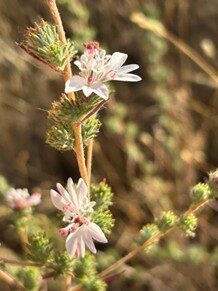
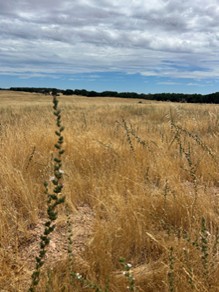
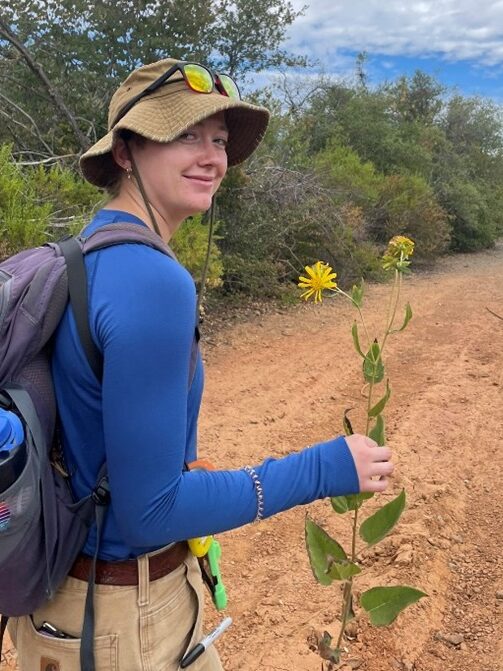
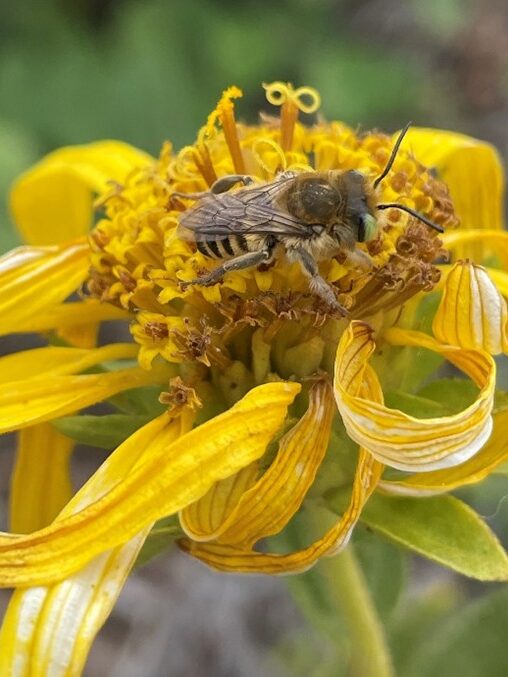
A close-up, accompanied by a landscape photo of Spicate calycadenia, found at Deer Creek Hills Preserve, Sacramento County. There were over 10,000 individuals, orders of magnitude more than the previous record of the plant in the area.
On day three, we weren’t quite so lucky. We spent five hours driving to a remote location in the Mendocino National Forest, only to encounter a landslide and find the seeds of our target species completely dispersed. We try to time our trips just right, but weather, changing priorities, and simply bad luck significantly impact our success. Oftentimes, we must return to populations over multiple years to secure a quality seed collection.
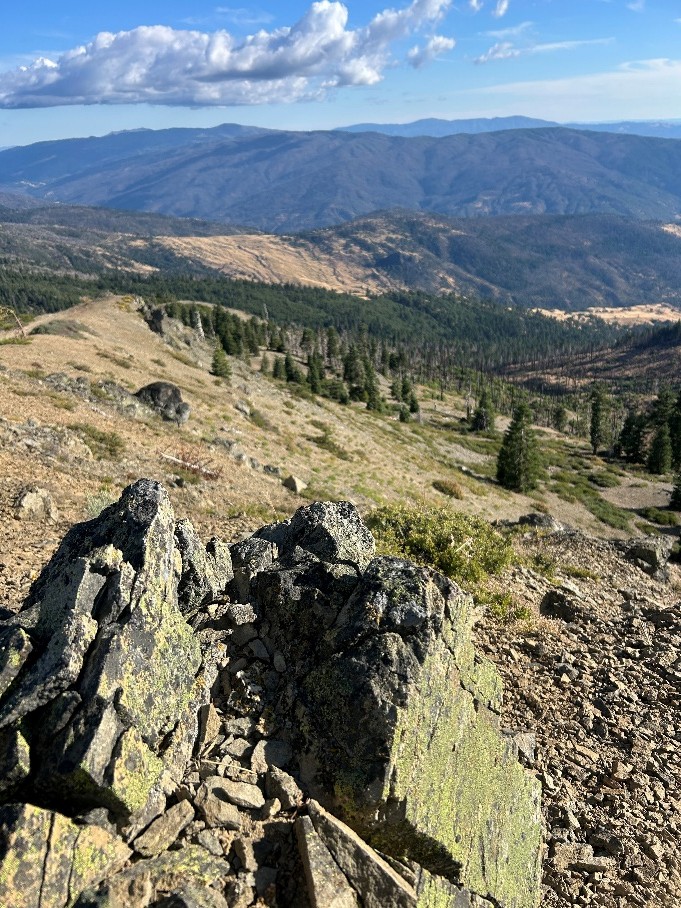
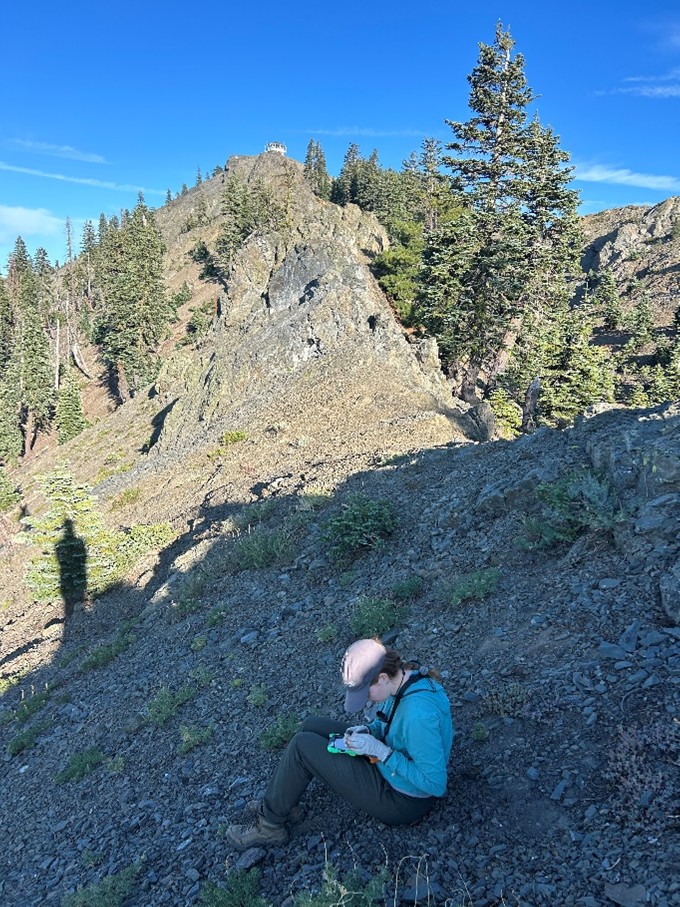
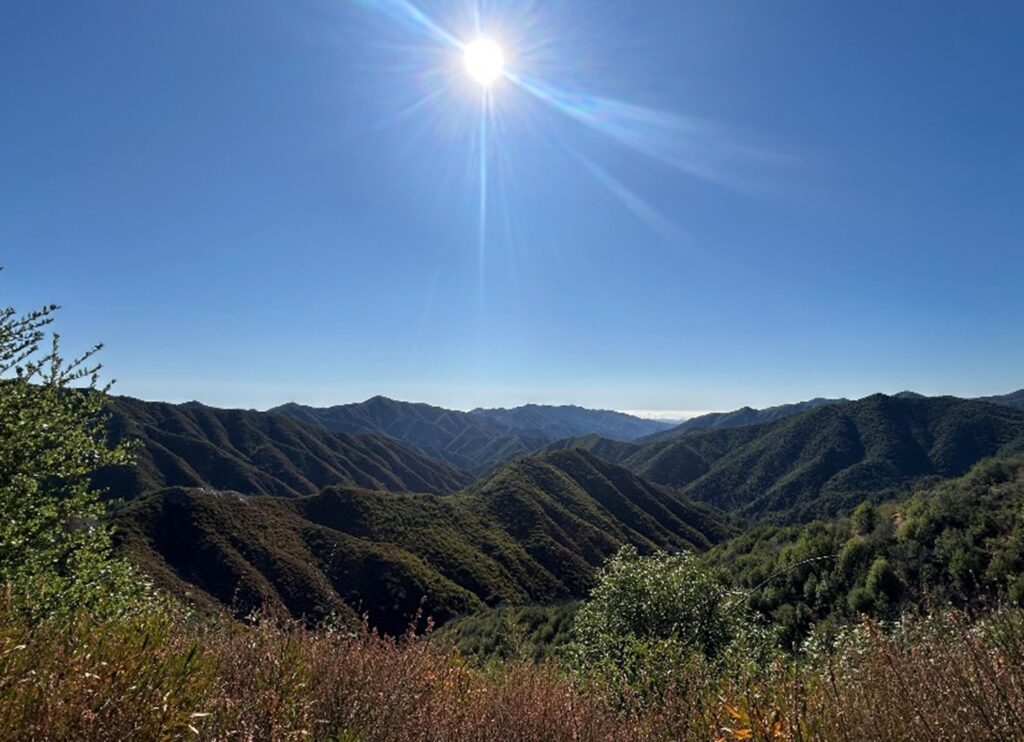
Day four was spent driving south once again, stopping by the Bay Area for two seed collections, and eventually landing at a camping spot near our site for day five: a 15-mile hike to collect seeds from an occurrence of Santa Lucia bedstraw (Galium clementis) in the mountains of Big Sur. This species is very rare (California Rare Plant Rank 1B.3) and has never been seed banked, making it a prime target for our team. It was scouted and mapped at this location six years ago by other members of the Rare Plant Team, Heather Schneider, Ph.D., and Sean Carson, but wildfires and landslides thwarted all attempts to return for the seeds. 2025 was the first year since then that the plant was even remotely accessible, and Chloe and I were up for the challenge.
After seven miles of hiking, we finally made it to the spot. There it was, Santa Lucia bedstraw, still growing in little tufts on the steep slope below the trail. It even had a few seeds ready to collect, which felt like a miracle!
ID Plants in the Field
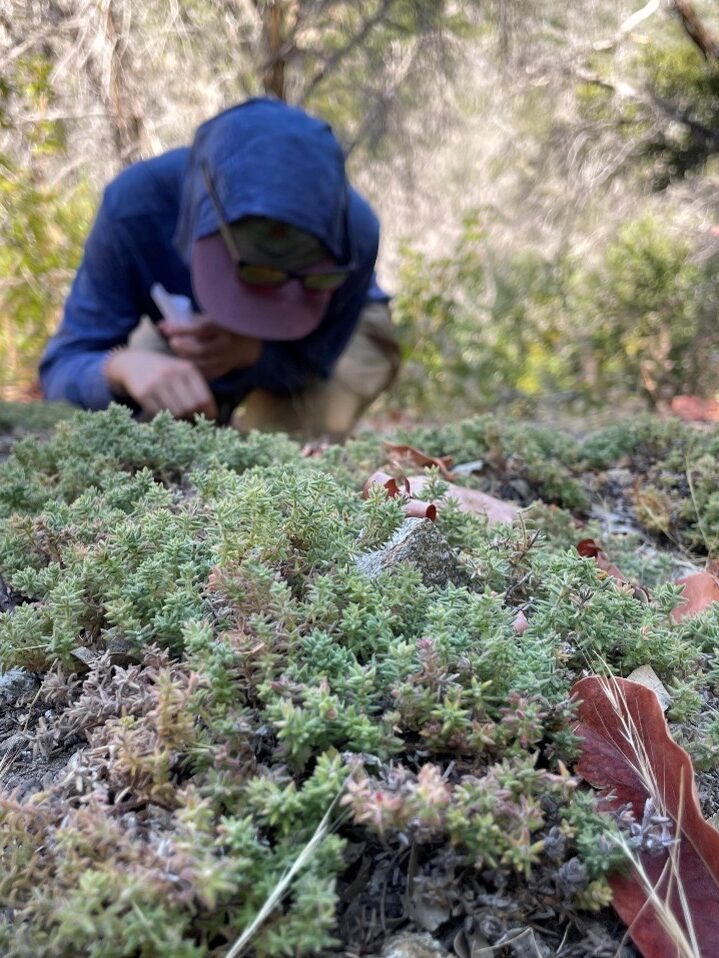
We looked around the area for more bedstraw and spotted several promising patches. However, upon closer inspection, we saw a slight difference in the shape of the tiny leaves. Properly identifying plants in the field is critical to making quality conservation seed collections, so we took out our Jepson Manual and used the key to identify these look-alike plants. They turned out to be a very close relative to our target plant, Cone Peak bedstraw (Galium californicum ssp. luciense), a different rare species which had already been seed banked. This meant we had to carefully investigate each plant before collecting seeds to ensure that we were collecting from the correct bedstraw.
We spent an hour swatting flies while climbing across the hillside, finding a few more of our target Santa Lucia bedstraw plants. Unfortunately, most had already dispersed their seeds. Just two plants still had enough to collect, including one with seeds we found caught in a spider’s web under the plant; it was a real team effort! Then the clock struck 1 pm, which meant it was nearly time to start our trek back to make it home by sunset. We debated whether to hike farther in hopes of finding at least two more seed-laden plants for a total of five maternal lines, or genetically distinct parent plants, which would increase the value of our conservation seed collection. The more genetic diversity we can capture, the better the seeds’ odds of success in the future. We decided it was worth the risk and continued.
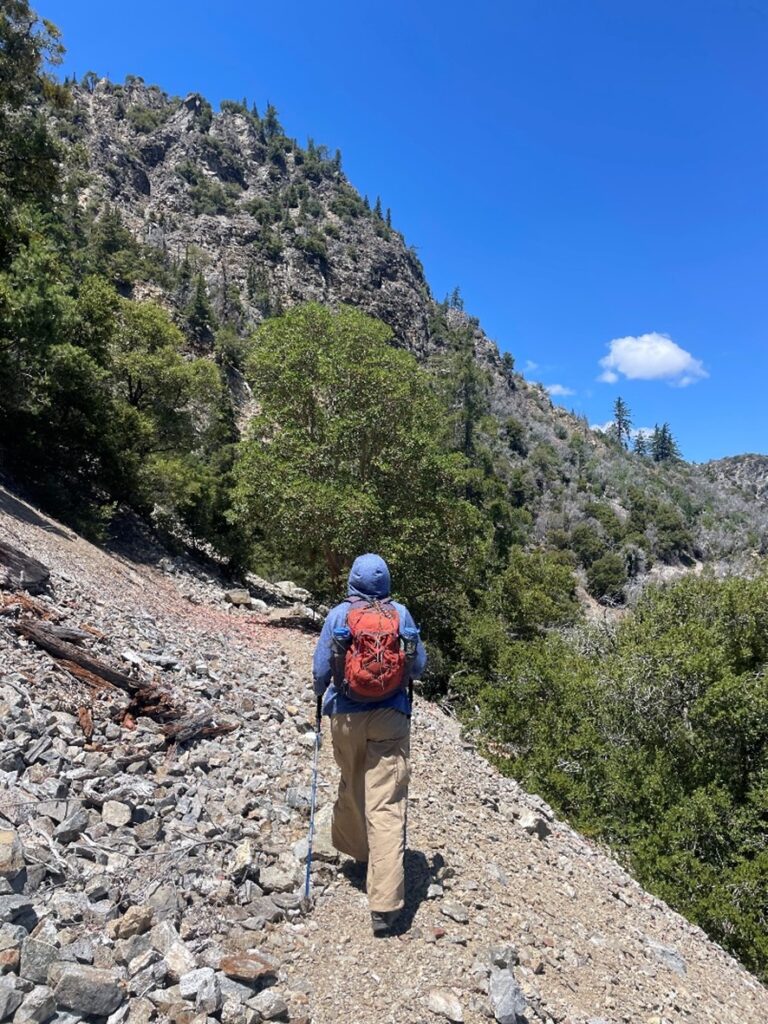
After another half mile, the conservation gods blessed us with three more plants still in seed. We quickly collected 10% of their seeds and began our journey home, racing the sun. We made it to the truck just as the fog was rolling in for the night and drove back to Santa Barbara, concluding this week’s field trip. Talk about a roller coaster! In the end, we spent 32 hours working outside and 27 hours driving that week.
This is the field-season life of a rare plant botanist. We face severe weather, pop tires on rugged roads, and encounter gorgeous views left and right. We take risks, push boundaries, and work overtime. It’s not always fun, but there’s a reason we stick with it. We love being part of the network of heroes to plants and their ecosystems. Just knowing we could be saving a species from extinction is worth the struggle.
Going the Extra Mile for Native Plant Conservation
Due to our team’s specialized focus on rare plants and the widespread threats rare plants face, our work takes us as far as Mendocino and the eastern Sierra Nevada. This far-reaching effort has historically been funded by the state of California and federal grants, but in 2025, these sources faced unprecedented challenges. Luckily, we were able to continue the work amidst federal funding freezes, thanks to the generosity of our community. Our rare plant initiatives continued, and we were able to add 24 species to our Conservation Seed Bank!
With more support, our team could adopt a more comprehensive approach to protecting these irreplaceable species. We could conduct more experiments to ensure the seeds we collect remain viable for future restoration projects, increase seed-bulking efforts to support the conservation of the most threatened populations, and strengthen coordination with private landowners to give us access to even more rare species. Until then, we’ll continue to make the most of what we’ve got, which is our cutting-edge rare plant program, already one of the best in the state, and our unshakable passion to conserve the most precious biodiversity of California. Wish us luck in our 2026 field season!
Down for the Counting: A Birdy Morning in Cuyama Valley
Introducing the 805 Initiative: Santa Barbara Botanic Garden’s Local Genetics Nursery Program