Donate
The Joy of Native Plant Gardening | How Liz Barnitz is Making a Difference
Getting started with native plants can feel overwhelming – so many species, so many choices. Should you hire a designer, or go DIY? Does that ceanothus shrub look better here, or there? If you’ve felt this way, congratulations, you’re a gardener!
I recently spoke with Liz Barnitz, president and landscaping coordinator of a Santa Barbara homeowners association (HOA) board. Since earning her California Native Plant Landscaper Certification in 2024 through Santa Barbara Botanic Garden, Liz has championed the use of native plants, creative rainwater harvesting, and habitat for wildlife. Her love of gardening began in her father’s nursery. After retiring from her career as a school principal, she rediscovered that passion, though at first, she didn’t think much about native versus non-native plants. That perspective shifted after taking the Green Gardener class at Santa Barbara City College and later immersing herself in the Garden’s community. Through these experiences, she came to understand the unique needs — and the quiet magic — of native plants. For Liz, gardening is about learning by doing, embracing mistakes, and seeing each plot as an experiment. As she puts it, caring for native plants isn’t fundamentally different from other styles of gardening, but “getting to know their specific needs is rewarding.”
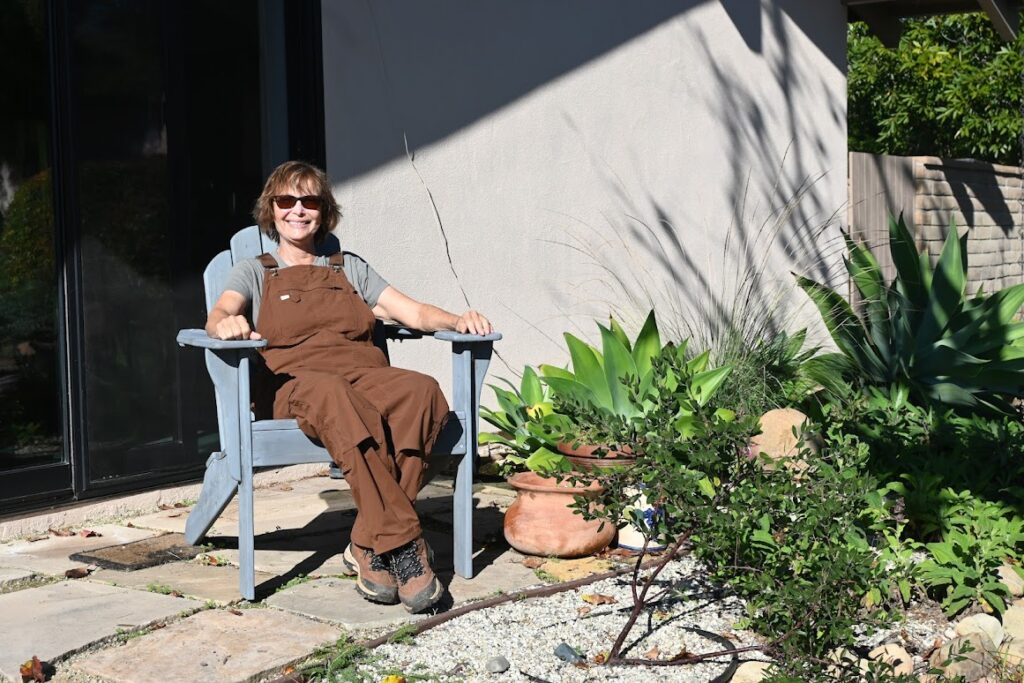
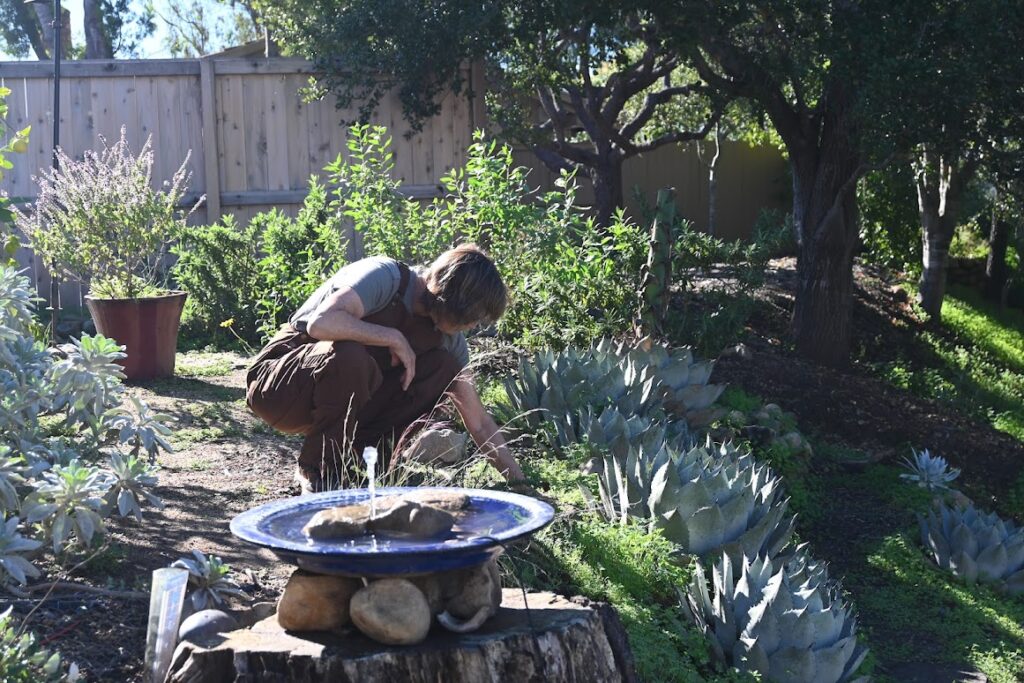
I’m grateful to call Liz a friend, and share her story of curiosity, play, and the joys of gardening with you. Our conversation took place in her beautiful garden, with birds rustling in the oaks and the Santa Ynez mountains stretching beyond.
Alejandro: I’m curious about when you first started planting here in your home and across your HOA. What were some of the goals you wanted to accomplish? We hear of many reasons for planting native plants, from building habitat for wildlife to harvesting rainwater.
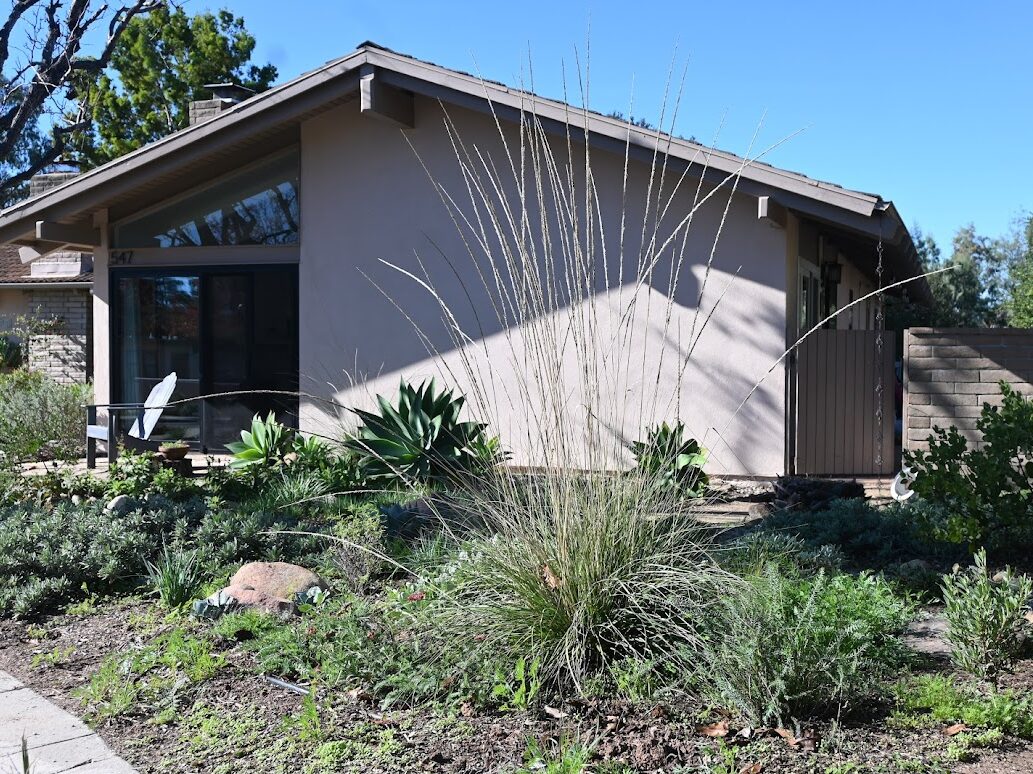
Liz: The beautiful thing about native plants is that they’re just stunning. Yes, I love everything they do for the habitat, the soil—everything—but honestly, they’re gorgeous. I remember when the oaks first caught my attention. I didn’t even realize they were here at first; they were so small when we moved in seven years ago, hidden behind a big juniper and a couple of jade plants. Over time, though, it’s been like this slow unfurling, an awakening. One day it’s as if a door opens and you realize, ‘Wait—I’m in an oak woodland.’ And that is absolutely amazing.
Alejandro: How did you begin harvesting rainwater?
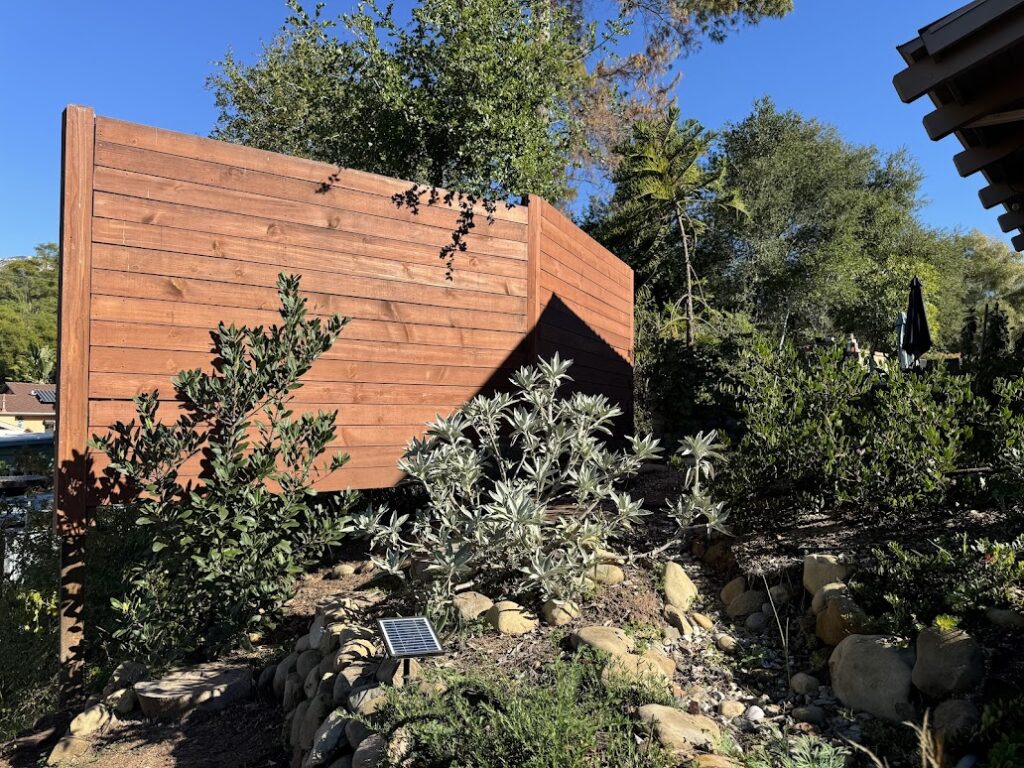
Liz: I love solving problems, so walking around the HOA I noticed all these drainage issues—pipes and culverts just dumping straight into the street. I started experimenting at my own house, digging a dry stream bed and figuring it out as I went. Along the way, I realized how much I love rocks—and what complements rocks better than native plants? That’s how the whole system came together.
Alejandro: How have you convinced your HOA to add native plants to the landscape?
Liz: I started by pairing low-maintenance plants like succulents with something familiar, like coral bells, so people could see a beautiful, easy combination. From there, I added small plantings and began showing people the benefits of natives: no pesticides, less water, and less maintenance than traditional hedges. I realized it was more effective to stop talking about native plants and just plant them—most people don’t even notice, and once they see how lovely they are, you can slowly point out, ‘Hey, that’s a native plant!’
Alejandro: The Garden’s native plant movement encourages everyone to join us in reaching a minimum of 30% native plants in the places where we live, work, and play. How do you recommend people get started? Is it as simple as planting a few and seeing how they do, or can you share how you approach it yourself?
Liz: A great way to start is to pick a small plot—maybe a 10×10 or even a 4×4—and make that whole area native instead of just adding one plant here or there. Think about what you love: grasses, meadow plants, the lupines you see along the beach. Look through some books on native plant communities and choose a style that inspires you. Try seeds or small plants, keep it manageable, and just begin. If you need approval, you can simply say, ‘I’d like to take this little square of my garden and try this.’
Alejandro: “Liz, since you’re gardening within an HOA where there may be plant restrictions, what tried-and-true native plants would you recommend for people who are just getting started? And are there any you’ve learned—through experience—that you wouldn’t try again?”
Liz: “Grasses are really underrated—deer grass, for example, is so fun to watch grow. Yarrow is another great starter, and experimenting is key—if it’s too hot for yarrow there, try a shadier spot. I’ve also gone a little crazy with buckwheats—especially red-flowering ones—they even spread into my neighbor’s yard! St. Catherine’s Lace (Eriogonum giganteum) is beautiful and accessible, with its gray foliage and delicate white flowers. Honestly, mass plantings of buckwheats can be stunning.”
Alejandro: Beyond the plants you’d generally recommend, is there one in particular—native or not—that you feel a special connection to? A ‘gateway’ plant that first drew you into working with native plants?
Liz: It’s the white sage. When I lived in Ojai, I planted one and was drawn to its structure—I just loved how it looked.
Alejandro: Is there any last piece of advice you’d like to share for those interested in habitat gardening?
Liz: Listen to the experts—master gardeners, Santa Barbara Botanic Garden staff, anyone with experience. Even if you’re not ready to follow all their advice, their ideas and guidance shape your garden. Take classes at the Garden and support your gardeners in becoming certified native plant landscapers. Gardening may feel solitary, but it’s really a community effort, built on all the people who have influenced what and how you plant.
Join Liz & Grow Native Plants in Your Community
We hope you feel empowered to use native plants in your landscape. By joining the native plant movement and getting involved in the many opportunities here at the Garden, you are joining a community of stewards like Liz, in promoting native habitats and ensuring that biodiversity thrives. Let’s get growing together!
Introducing the 805 Initiative: Santa Barbara Botanic Garden’s Local Genetics Nursery Program
Getting Started: Small First Steps Towards Transformation in Cuyama