Donate
Getting Started: Small First Steps Towards Transformation in Cuyama
Every restoration project has a beginning that looks far quieter than people expect. Before the plants bloom and the critters return, there is planning and lots of it. There are conversations, calendars, and maps spread across tables, and moments of uncertainty balanced by shared excitement. For us, the early days of the Garden’s landscape transformation project in Cuyama (a.k.a. Planting with Purpose) has been about learning, preparing, and taking those first hopeful steps from concept into action.
In the summer of 2025, much of our work happened on screens rather than in the soil. Over several months, our team came together with our close collaborators at Quail Springs for a series of virtual meetings: sometimes quick check-ins and other times long, strategic conversations, stretching hours. These meetings were about more than logistics; they were a way to build trust across partners, distribute responsibilities thoughtfully, and make sure everyone felt grounded by a shared vision. As the original author of the project transitioned roles, we took steps towards a broader team approach: clarifying our newfound roles, listening, and asking the kinds of questions that would help the project maintain its strong roots.
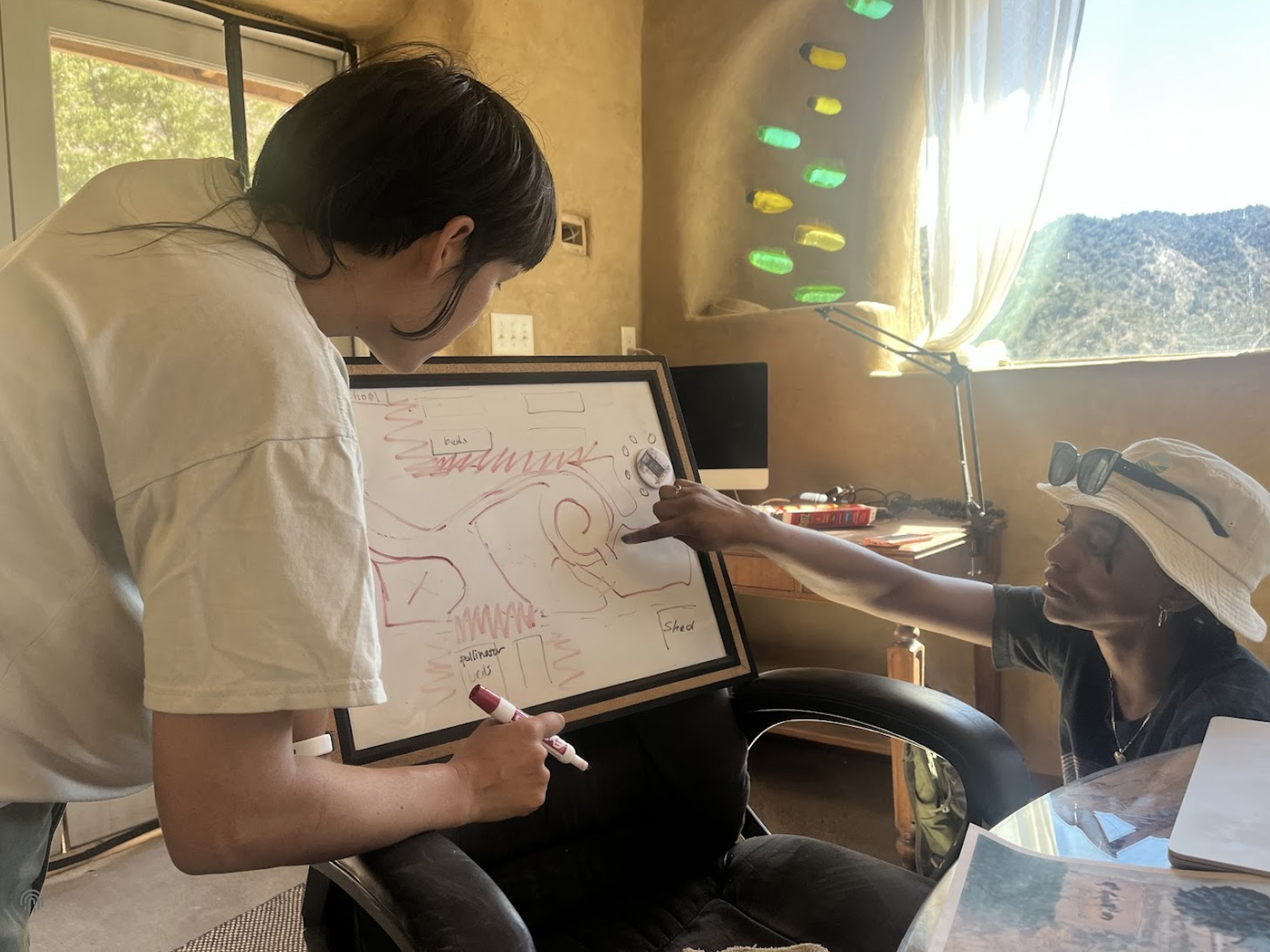
Amy Yuelapwan and Stephanie Clark sketch ideas for the future field design at Cuyama Elementary.
This is where restoration begins!
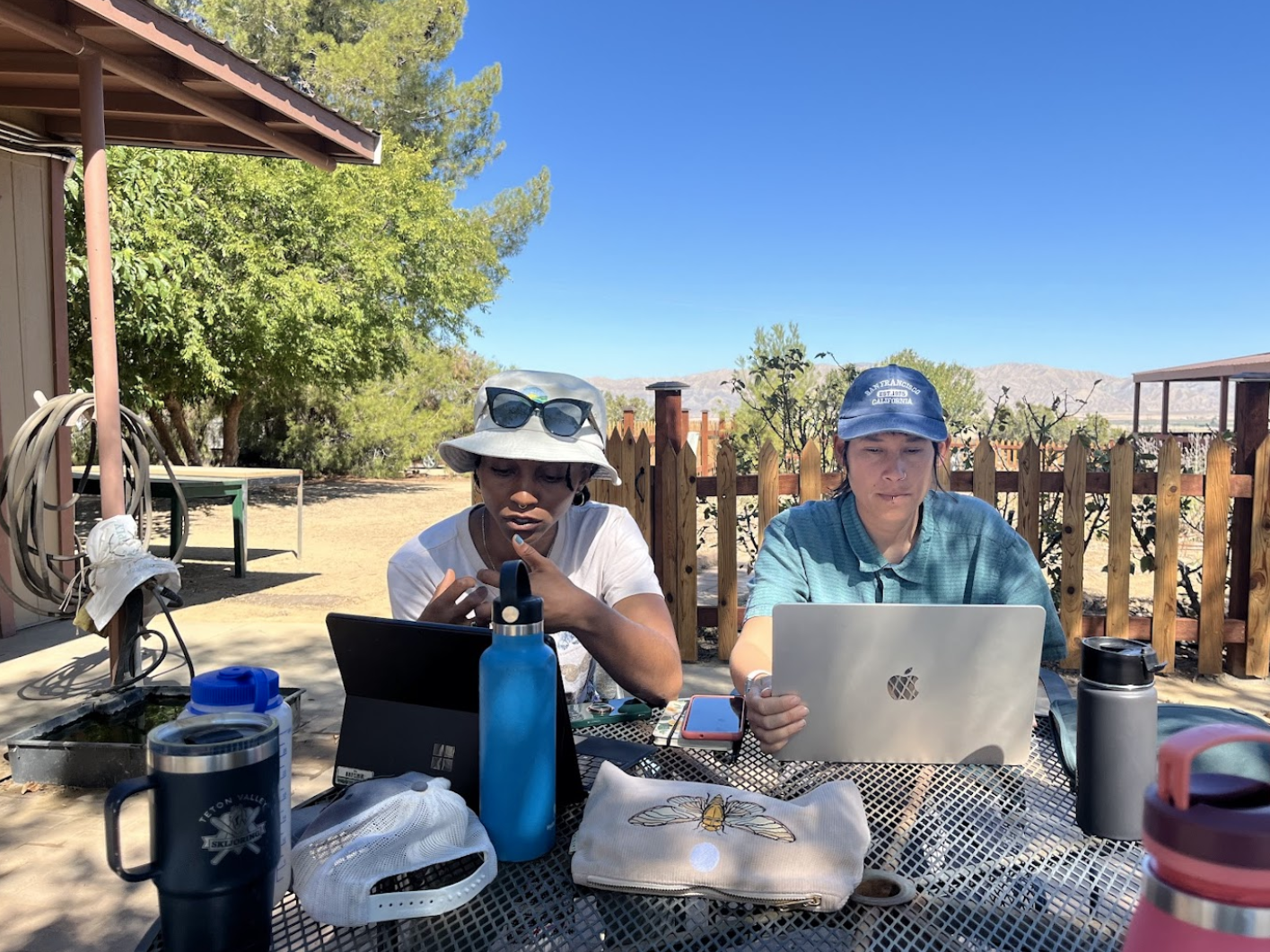
By July, we were sketching out our next steps. In August, those sketches began to sharpen. We met more frequently, including a focused conversation with our collaborator Steve Gliessman of Condor’s Hope, whose deep connection to the land helped guide our thinking, always reminding us to consider “what would nature do?” These early discussions were about alignment: making sure the people, the plans, and the place were moving together. By September, our conversations had settled into a rhythm and centered on preparing for the field season ahead.
Prepping Partner Sites: From Plans to Action
That first real step came in October. After a final virtual meeting to align schedules and expectations, we headed northeast for overnight partner site visits to Cuyama Homegrown, the Cuyama Elementary School site, Cuyama Valley Family Resource Center, and the Buckhorn. Walking the sites together helped turn abstract plans into something tangible. Amy, from Quail Springs, looked closely at soil, slope, sun, and wind at each site. We talked through where plots might live and where our native plants would have the best chance of thriving.
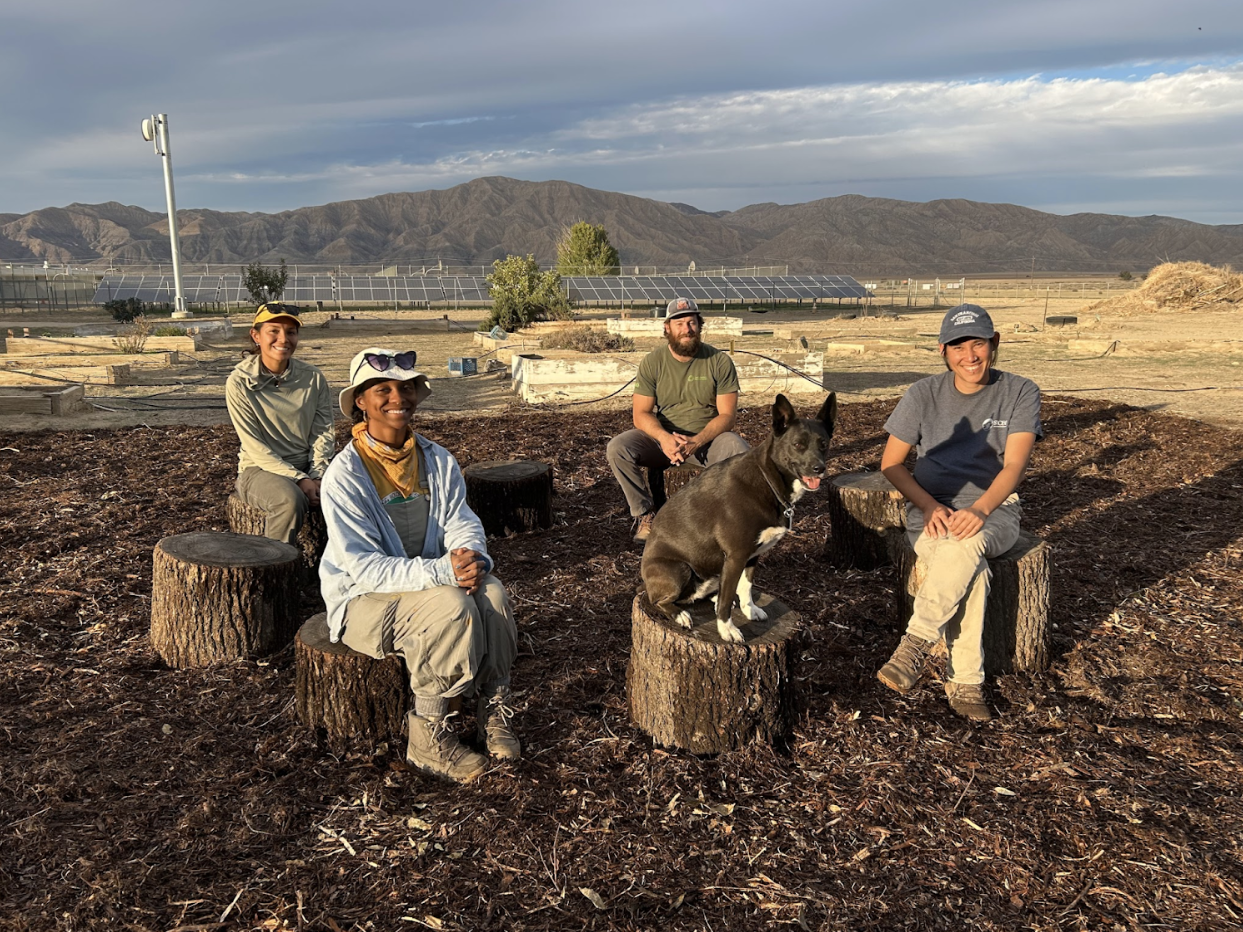
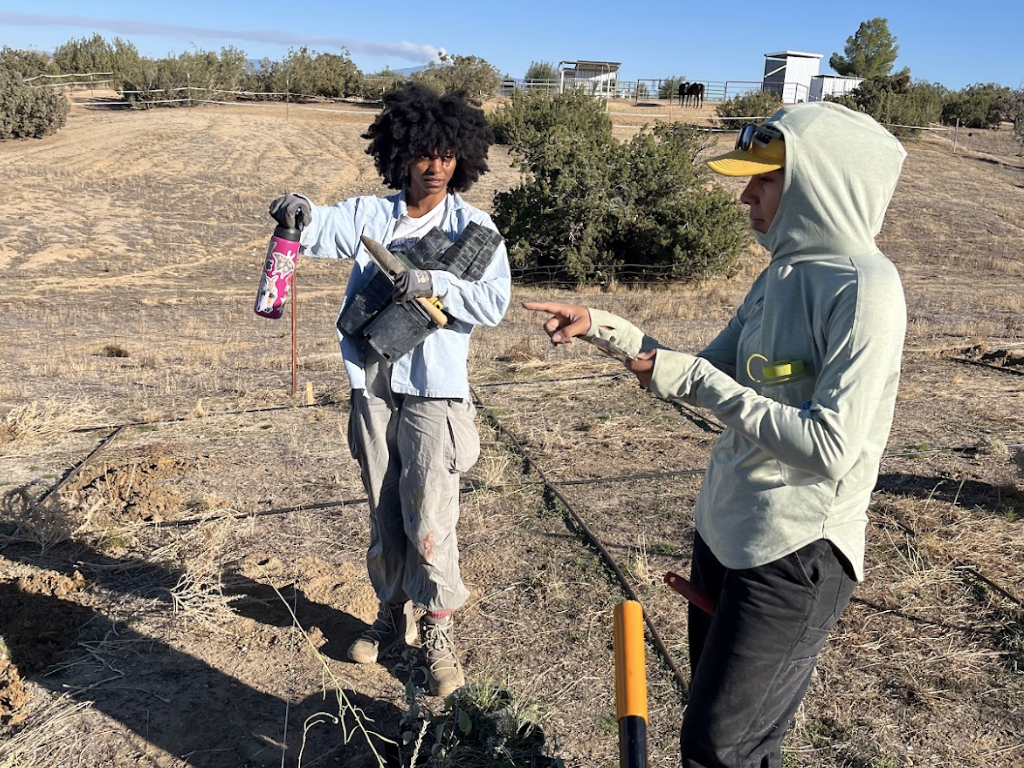
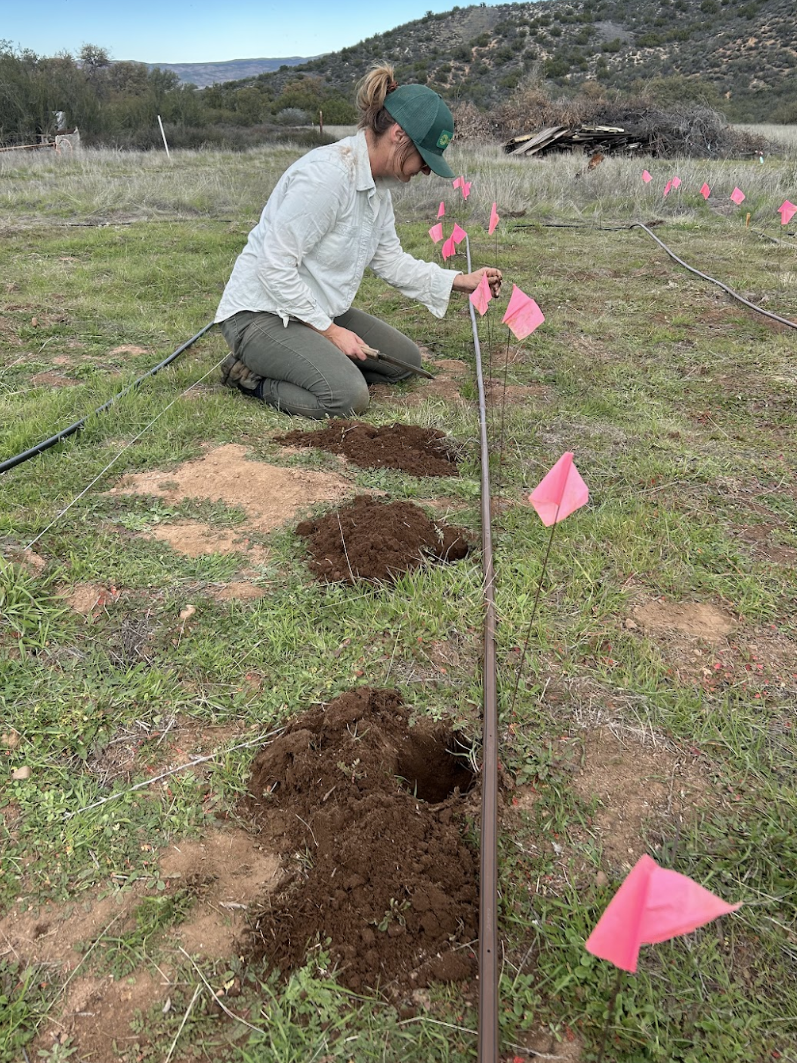
Later in October, we spent a day at Condor’s Hope with Steve, talking through details and making decisions that only really come into focus when you’re standing in the place itself. Not long after, we returned to clean up nails and delineate plots, a small but important act. Clearing debris and marking boundaries may not sound glamorous, but they’re essential parts of the process.
The Planting Begins: Native Plants Go In
November brought the kind of work that feels especially hopeful. Over two days at Cuyama Homegrown, we planted 231 plants, each one placed, planted, and watered by hand. The following week, we shifted gears to mulching at the Cuyama Elementary School site. It was practical work, meant to protect our young native plants and support their establishment.
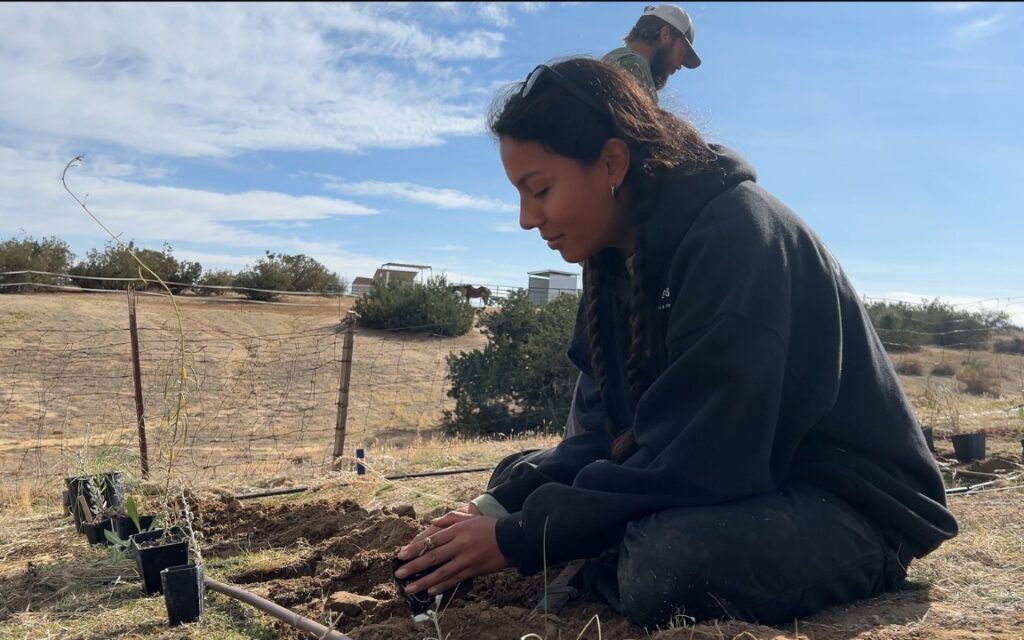
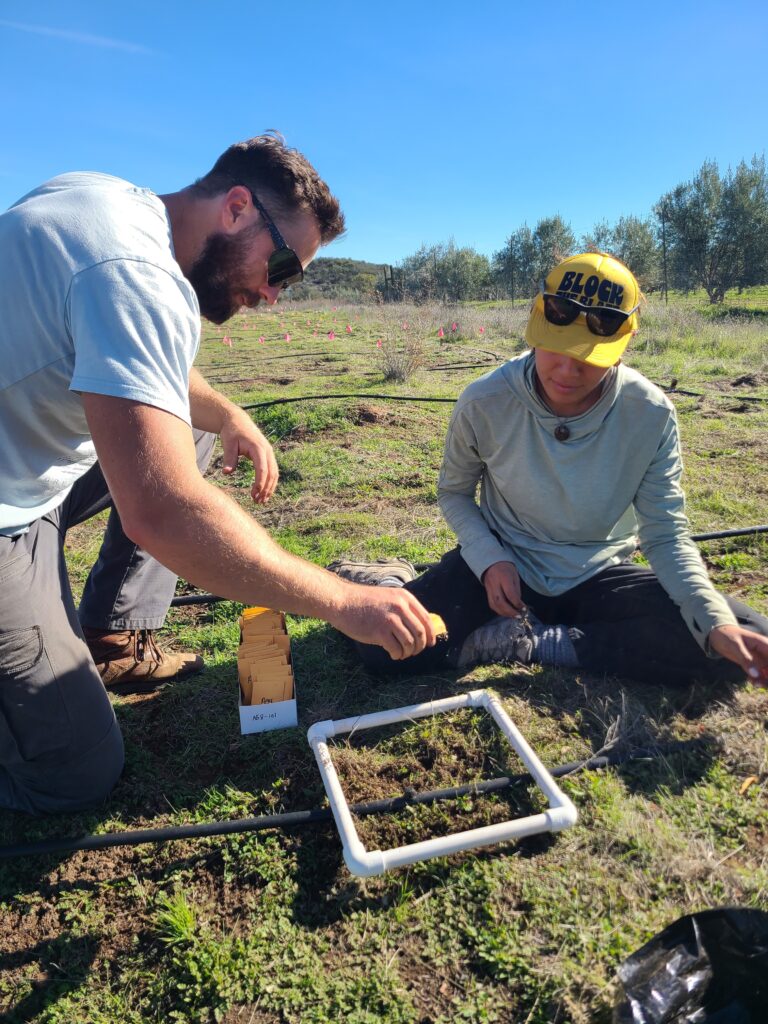
We carried that momentum into early December with another two-day trip to Condor’s Hope. This visit combined many pieces of “getting started” into one effort: installing and troubleshooting irrigation, spreading seed carefully into one-by-one-foot quadrats, and planting around 180 more native plants. It was hands-on, dirty, and deeply satisfying. These were the moments when planning met practice, when months of conversation finally turned into action.
Celebrating Our Progress: Restoration, Collaboration, and Hope
Looking back, what stands out most about this phase of the project isn’t just what we accomplished, but how we did it. Restoration is never a solo act. It’s built through shared meals, long drives, thoughtful disagreements, corn hole, and moments of laughter in the field. It’s about moving at a slow pace and letting the land guide you as much as your plans do.
As we get started in Cuyama, we’re holding onto a sense of hope. The plots are marked, the seeds are sown, and the first plants are in the ground. There is still so much ahead, but these early steps, careful and collaborative, are already shaping the story of what this place can become. Stay tuned for our next insight, which will focus on “Community & Collaboration”, specifically exploring the spring farmer and family events out in the Cuyama Valley.
In the Nick of Time: Serendipitous Seed Collection During Fire Season
The Science Behind It All
Putting Pollinators First Through Art: A New Way to Design Gardens
What the Torrey Pines Are Trying to Teach Us